








Warehouse Rack Repair: Bolt-On Repair vs. Welded Reinforcement
Choosing between a bolt-on kit and welded reinforcement changes far more than how the pieces attach, and warehouse rack repair on an active site often comes down to exactly this decision.
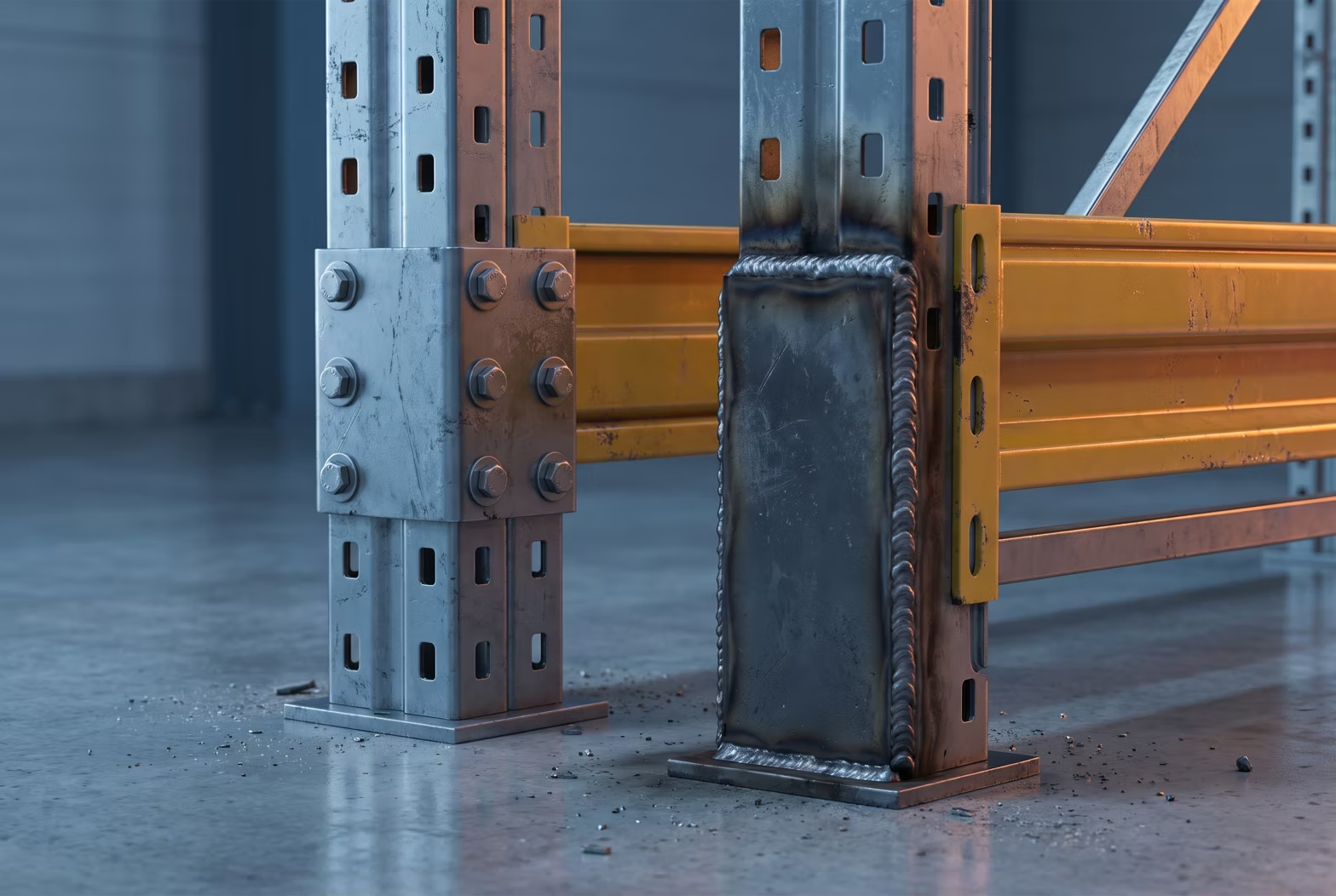
Warehouse rack repair using a bolt-on kit and warehouse rack repair using welded reinforcement solve the same underlying problem in two very different ways on site. Understanding what actually changes between them explains why a warehouse’s crew picks one over the other on a given job.
What a Bolt-On Repair Requires on Site
A bolt-on rack kit attaches mechanically, using fasteners rather than heat. No hot work permit is needed for a warehouse, since nothing on site is being welded. Installation inside a warehouse typically takes a fraction of the time a weld-based repair requires, often completed in under an hour per column.
This also means no fire watch, no need to clear flammable materials from the surrounding rack aisle, and no smoke or fumes in an occupied warehouse. A bolt-on repair can often happen in a warehouse with product still stored nearby, provided the immediate work area is clear.
Sound and disruption for a warehouse are minor by comparison too. A bolt-on install is drilling and torquing, not grinding and arcing, which matters in a warehouse running other operations nearby during the rack repair window.
What Welded Reinforcement Requires on Site
A weld on a rack column requires heat, which changes the entire safety picture around the job. A hot work permit, a fire watch during and after the work, and clearance of combustible material from the surrounding area are standard requirements wherever welding happens in an active warehouse building.
Welding also demands more from a warehouse’s surrounding environment. Certain warehouses, including anywhere flammable or combustible product is stored nearby, may restrict or prohibit hot work entirely. That restriction removes welding as an option for the rack repair, regardless of whether it would otherwise be the preferred fix.
Insurance carriers sometimes weigh in on this rack decision too, separate from what the warehouse itself would otherwise allow. A policy that requires advance notice or a dedicated permit for any hot work performed on the property can add a step to the schedule that has nothing to do with the rack itself, and it is worth checking before a welded repair gets promised on a tight timeline.
Scheduling around a welded rack repair is generally less flexible as well. A fire watch commitment, sometimes required to continue for a period after the work itself finishes, ties up a warehouse’s staff time beyond just the hours the actual repair takes.
When Each Approach Actually Gets Chosen
A bolt-on kit is the default warehouse choice wherever the damage and the confirmed rack specifications support it, simply because it gets a warehouse back to full operation faster and with fewer site restrictions. Welded reinforcement becomes necessary when a bolt-on solution cannot achieve the required strength for the specific damage, or when the rack repair calls for a custom modification a standard kit was not engineered to provide.
A warehouse operating under hot-work restrictions of its own, sometimes tied to insurance requirements or the products stored on site, gets pushed toward bolt-on rack solutions whenever the damage allows for it. In those warehouse buildings, a bolt-on repair is often the only realistic path forward.
Why the Engineering Comes First, Not the Method
Neither approach is inherently better for a warehouse. Each restores a different kind of rack damage to a different standard, and the choice follows from what the confirmed rack and the confirmed damage actually require, not from a general preference for one method over the other.
A rack crew defaulting to whichever method they happen to be set up for that day, rather than the one the damage actually calls for, is a common shortcut worth watching for. A welding-focused crew reaches for a torch out of habit even on damage a bolt-on kit would handle faster and with less disruption, and the reverse happens just as easily with a crew that only stocks bolt-on parts.
1 Stop assesses which approach applies to a warehouse before recommending either one, drawing on decades of judging where a bolt-on fix holds up and where the job calls for the heavier commitment welding requires.
Why Choosing Between Methods Needs an Unbiased Judge
Choosing between a bolt-on kit and welded reinforcement is a judgment call for a warehouse, and that judgment should not come from whoever happens to sell one of the two options. 1 Stop’s decades of rack repair experience support an agnostic view across both methods and the manufacturers behind them. A provider selling only bolt-on kits, or only welding services, has a reason to favor whichever they offer regardless of what the site and the damage actually require. Depending on those specifics, a different manufacturer’s kit, welded reinforcement, or full replacement can be the right call. Making that decision well takes a partner without a single method to default to.
Getting the Method Right, Not Just the Repair
A warehouse operating under insurance-driven restrictions in particular should confirm this upfront, since that warehouse’s own policy may rule out an option a less restricted warehouse could otherwise use.
That confirmation is a two-minute conversation with the property manager or the insurance carrier’s loss-control contact, not a formal review, but skipping it can turn a same-day bolt-on job into a multi-day delay once a welded fix gets scheduled and then blocked at the door. Getting this right up front protects a warehouse from both an unnecessary permit and a repair method its own policy would never have allowed in the first place.
1 Stop weighs site conditions against engineering requirements before recommending either method, so a warehouse rack repair never carries an unnecessary hot work permit or a bolt-on fix asked to do more than it was built for.