








Warehouse Rack Repair: What a Repair Kit Actually Restores
A rack repair kit is not a patch over a dent, and warehouse rack repair done properly restores the rack column’s original load path, not just its appearance.
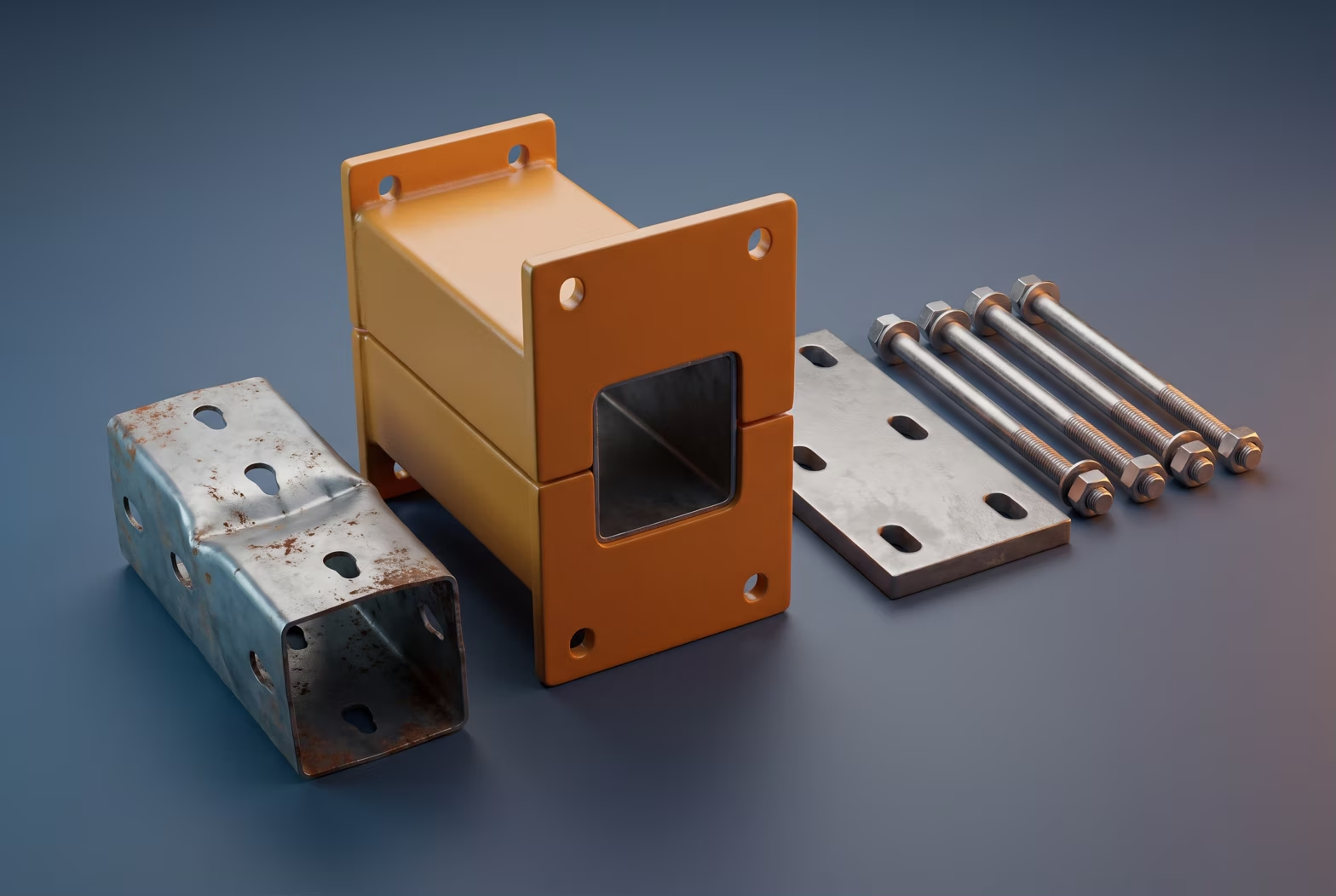
Warehouse rack repair kits exist to put a damaged column back to a specific engineering standard, not to make it look presentable again. Understanding what a kit is actually restoring clarifies for a warehouse why the confirmed rack specifications matter so much before one gets installed.
Restoring Load Path, Not Covering a Dent
A column in a warehouse rack carries weight down its length through a continuous path of steel. Damage interrupts that path at the point of the bend, forcing load to redistribute around a weaker section. A properly engineered rack repair kit reinforces or replaces enough of that section to restore a continuous, rated path from top to bottom for a warehouse, not just to hide the visible mark.
A kit that only addresses the cosmetic bend without restoring that continuity leaves the load still redistributing around a weak rack point, even though the column looks straight again. The steel underneath a repaired-looking rack surface is what actually determines whether the fix worked.
Restoring the Original Connection Points
Beam connectors, bracing attachment points, and base plate anchoring in a warehouse all depend on the column holding its original geometry. A kit built to the confirmed manufacturer and model preserves those connection points exactly for a warehouse, so beams and braces reattach the way they were designed to rather than at a slightly altered angle.
A slightly altered angle sounds minor to a warehouse until it changes how load transfers between components. A beam seated even a small amount off its original rack position puts uneven stress on its connectors, which is exactly the kind of hidden problem a repair is supposed to eliminate, not introduce.
Restoring the Rated Capacity, Not an Approximation
A rack repair that gets the shape roughly right without confirming it against the actual rated capacity of that rack is not a completed job. The goal is a column that can be relied on to carry what its load plaque claims, verified against the specific manufacturer’s engineering rather than assumed from how the finished repair looks.
Verification is what separates a real repair kit from a cosmetic bracket in any warehouse. Anyone in a warehouse can bolt a piece of steel over a bend. Confirming that the finished assembly actually meets the original rating is the engineering step that makes the rack repair count for something rather than serve as a temporary cover.
What a Kit Does Not Restore
A kit reinforces the specific damaged section for a warehouse. It does not compensate for corrosion elsewhere on the rack frame. It does not address bracing that failed independently of the column. It does not extend to a section of steel that has moved past what the kit’s engineering was designed to handle in the first place. Recognizing those limits is part of choosing the right repair for a warehouse in the first place, not a limitation discovered after installation.
This is why a kit installation is never treated as a standalone task separate from the surrounding warehouse review. A crew installing the kit is also confirming that everything around a warehouse’s repaired section, from adjacent bracing to nearby anchor points, falls within what the kit was actually engineered to sit next to. A kit installed correctly next to a problem it was never meant to address gives a warehouse a false sense that the whole area has been resolved.
Why the Right Kit Depends on an Unbiased Comparison
Knowing what a kit is supposed to restore is only useful to a warehouse if the kit chosen is actually the right one for the job. 1 Stop’s over 30 years of experience support an agnostic comparison across kit types and manufacturers, not a default to one company’s engineering. A provider selling a single line has no real comparison to offer a warehouse. Depending on the damage and the confirmed rack, a different manufacturer’s kit, or full replacement instead of any kit, can be the answer that actually restores what a warehouse’s column needs. Reaching that answer takes a partner weighing real alternatives, not promoting one.
Why This Standard Matters More Than It Looks
A repair that looks finished from a warehouse walkthrough but has not actually restored the load path leaves the same risk it started with, just less visible. 1 Stop holds every repair kit to the confirmed manufacturer standard for exactly this reason, built on decades of understanding what warehouse rack repair has to actually restore rather than what it has to look like.
That standard applies the same way for a warehouse whether the repair is on a brand-new rack or one that has been in service for twenty years. The engineering requirement does not soften for a warehouse just because the surrounding column has some age on it.
A warehouse manager asking the right follow-up questions of any provider can tell fairly quickly whether that provider is offering the deeper standard or the cosmetic one.
The evidence worth asking for is specific: which manufacturer’s specifications the kit was engineered against, what the confirmed rack rating was before and after the repair, and whether the connection points were checked against the original geometry or just eyeballed for a rough fit. A provider who can answer all three without hesitation is working from the engineering standard. One who can only point to how the finished repair looks is not.
1 Stop judges warehouse rack repair against restored load path, connection integrity, and confirmed capacity, never against appearance alone, because that is what a rack repair is actually supposed to do.