








Warehouse Rack Repair: Building a Culture That Encourages Reporting Damage
The Fastest Warehouse Rack Repair Program Still Depends on Someone Speaking Up First
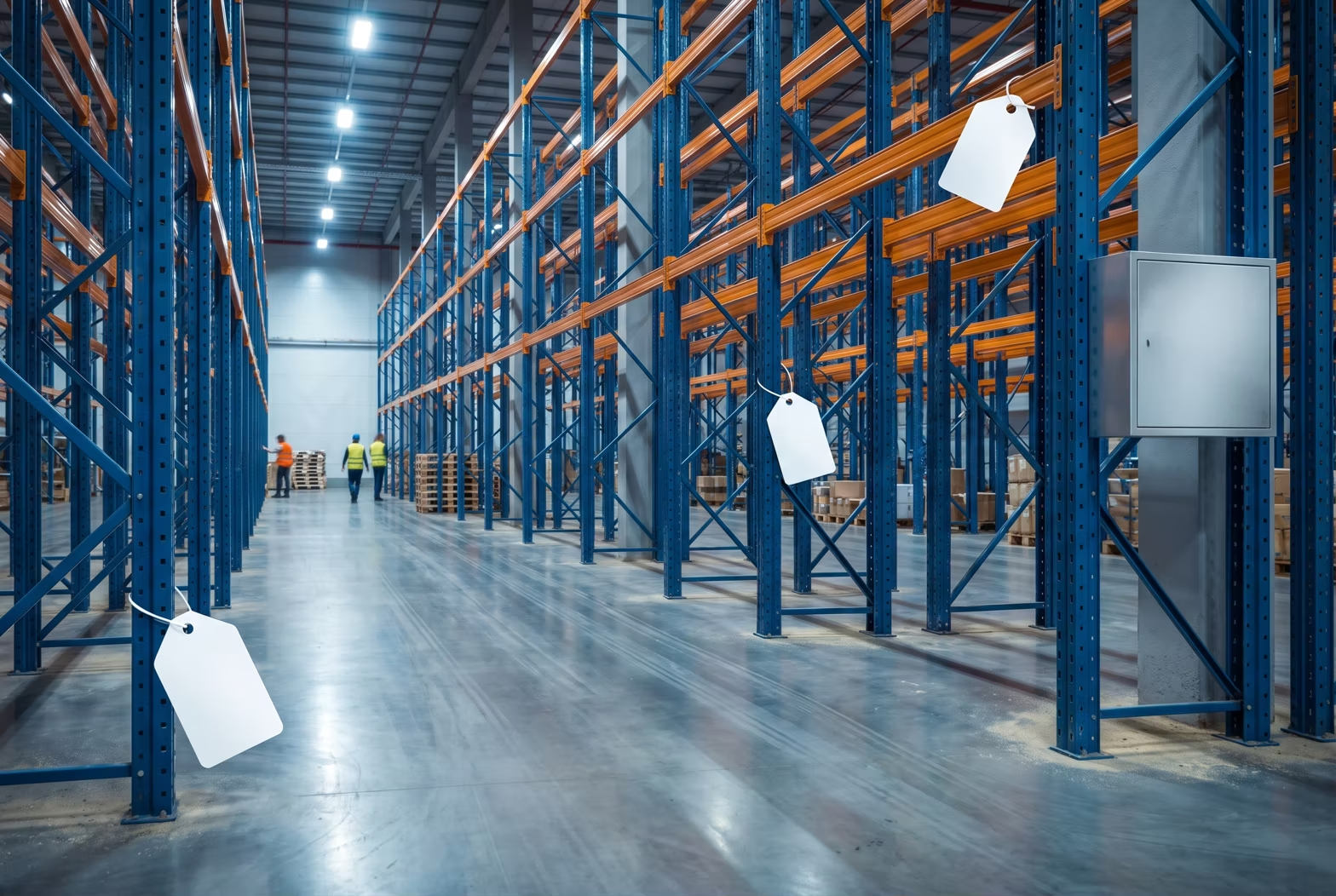
Warehouse rack repair only ever moves as fast as the report that starts it. A warehouse can have the best repair partner in the business on call and still sit on damage for weeks if the forklift operator who clipped a column never says anything about it. Most warehouses already have a way to report rack damage. What a lot of them don’t have is a floor culture where reporting it feels like the obvious, comfortable thing to do rather than the thing that gets someone singled out.
That gap matters more than most safety programs give it credit for. A reporting form or a hotline number posted on a wall does nothing if the actual culture around it punishes the person who uses it. A warehouse gets the reporting behavior its culture actually rewards, not the behavior its policy manual describes. That difference shows up directly in how much rack damage sits unreported until an inspection finally finds it.
Why Reporting Rack Damage Feels Risky to the Person Who Caused It
Put yourself in the position of the operator who just clipped an upright. The natural reaction in a lot of warehouses is dread rather than relief, because reporting the hit means admitting fault out loud in front of a supervisor, possibly with consequences attached. In that kind of warehouse the quiet, rational move is to glance at the damage, decide it looks minor, and keep working. Nobody set out to hide a safety problem. They just made a reasonable bet that staying quiet was less costly than speaking up.
That bet is exactly what a warehouse needs to make a bad one. The fix isn’t a stronger warning about what happens if damage goes unreported, since a warehouse can’t punish its way into faster reporting. The fix is making the report itself the lower-risk choice than the silence, which means treating a reported hit as routine warehouse business rather than an incident requiring blame.
What a Warehouse Actually Has to Change to Make Reporting the Easy Choice
A warehouse that wants more reporting, not less, starts by separating the report from the consequence. An operator who flags a hit gets thanked for catching it early, not questioned about how it happened. That single change, repeated consistently, is what eventually makes reporting rack damage feel normal instead of risky, because word travels fast on a warehouse floor about what actually happens to the last person who spoke up.
Visibility helps the same way. When a reported finding turns into a scheduled repair within days, every operator on that warehouse floor sees the system work exactly as advertised, which reinforces that reporting leads somewhere useful rather than nowhere. A warehouse that lets reported damage sit unaddressed for weeks teaches its own team the opposite lesson without meaning to, and that lesson is far harder to undo than it was to avoid creating in the first place.
Making Rack Damage Reports a Point of Pride, Not a Point of Blame
The warehouses that do this best go a step further than simply not punishing reports. They treat a caught, reported piece of rack damage as a genuine catch, on par with any other safety win worth mentioning at a shift meeting. Naming the specific operator who flagged a rack issue works the same way a warehouse might recognize someone for a clean audit or a strong safety streak. It turns reporting into something a warehouse floor wants credit for, not something everyone quietly hopes to avoid.
None of this requires a warehouse to overhaul its safety program from the ground up. It requires a warehouse to look plainly at which behavior its current culture is actually training, on purpose or not. Then it has to shift the reward toward the report instead of away from it. A warehouse that gets this right ends up hearing about rack damage sooner, and sooner is the entire advantage.
Why an Agnostic Rack Repair Partner Makes a Reporting Culture Worth Building
Over 30 years of hands-on rack repair experience has shown 1 Stop that a warehouse’s reporting culture only pays off if the repair on the other end of it actually delivers. 1 Stop’s agnostic approach means every recommendation comes from the damage itself and the rack’s real make and model. It draws on repair kits from a wide range of manufacturers instead of pushing whatever one company happens to sell. A provider tied to a single kit line has an obvious reason to fit every reported finding into its own catalog rather than into what the damage actually calls for.
Depending on how the member was hit and where the damage sits on the frame, the right answer can be a bolt-on kit from one manufacturer, a different manufacturer’s kit entirely, or full replacement of the damaged component. A warehouse that has finally gotten its team comfortable reporting damage needs a repair partner who honors that trust with a recommendation built on the damage, not a sales pitch dressed up as one.
That is the real payoff of a warehouse culture that treats reporting as normal instead of risky. Every report converts into a fast, correctly matched repair instead of sitting quietly unaddressed, and the whole warehouse rack repair program gets faster simply because people are willing to speak up. 1 Stop built its model to reward that speed. That means full turnkey scheduling and a recommendation built from the damage rather than a catalog. It also means decades of experience turning an early report into a small, cheap fix instead of a large, expensive one.