








Warehouse Rack Repair: The Exposure Behind a Documented Finding
A Warehouse Isn’t Exposed by Damage. It’s Exposed by a Known, Unaddressed Finding.
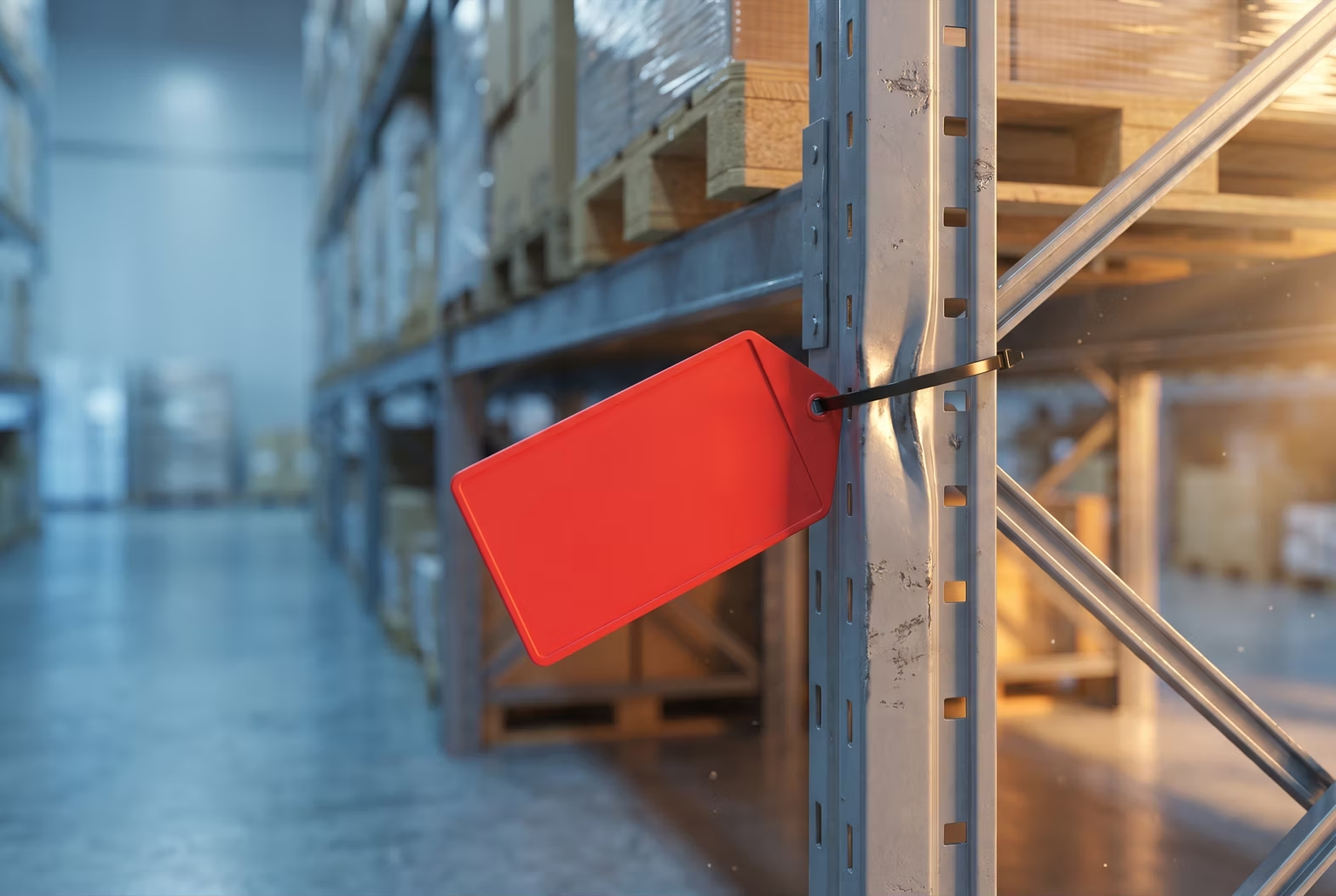
Warehouse rack repair carries a risk most warehouse managers never think about until they’re staring at it directly. A dented column that nobody noticed is a warehouse problem, but it isn’t yet a documented warehouse problem. The moment that same damage gets flagged, whether in a forklift operator’s incident report or a routine inspection, the warehouse’s position changes completely. From that point forward, the responsibility to act on the finding exists whether or not the actual repair happens right away, and that gap between knowing and doing is where a warehouse’s real exposure sits.
This isn’t about whether the damage itself is dangerous in the abstract. Plenty of dented racks in an ordinary warehouse hold up fine for a long time before anything fails. The exposure comes from the record, not the steel. A warehouse that documents a rack issue and then lets it sit unresolved for weeks has created a written trail showing it knew about a condition and chose not to close it out. That trail exists whether the eventual outcome is nothing at all or something serious, and it is far easier to explain a fast, documented repair than it is to explain a documented finding that sat open.
What “Known and Recorded” Actually Means Once an Inspection Flags Something
A rack inspection report, a maintenance ticket, or even a quick note from a warehouse employee all do the same thing once they exist, since they turn an informal observation into a formal one. Before that moment, a warehouse operation can reasonably say it didn’t know a specific rack location needed attention. After that moment, it can’t say that anymore, and every day the finding sits without a scheduled repair adds to a record that shows the gap between knowing and fixing.
Warehouses that treat this well close that gap fast, on purpose, as a matter of warehouse policy. A finding gets logged, a repair gets scheduled within days, and the record shows a short, clean line from discovery to resolution. Warehouses that don’t often let findings pile up in inspection reports month after month without meaning to. Each one becomes a small, separate acknowledgment that a rack problem existed and nothing happened. That pattern is worse than any single unresolved finding on its own, because it reads less like an oversight and more like a standing choice.
Why Postponing a Known Rack Finding Is the Riskier Choice, Not the Safer One
Some warehouse managers treat a delayed repair as the cautious option. Nothing gets touched, nothing gets disrupted, and the decision gets pushed to a later date when things slow down. That instinct gets the actual risk backwards. Once a rack finding is on record, delay doesn’t make the finding disappear. It only adds time to a documented gap between “we found this” and “we fixed this,” and that gap is the exact thing that turns an ordinary maintenance item into something a warehouse has to explain later.
Postponement doesn’t reduce exposure the way it might for a purely cosmetic issue, because a load-bearing rack member behaves differently under continued use than it did the day it was flagged. A warehouse operation gains nothing by waiting except a longer written record of a known condition left open. It loses the one thing that actually limits exposure, which is a fast, complete repair closing the finding out before it can become anything else.
Why an Agnostic Rack Repair Partner Closes the Gap Faster
Over 30 years of hands-on rack repair experience has shown 1 Stop that the warehouses with the least exposure are the ones who can move from a documented finding to a completed repair the fastest. That speed depends on getting the right answer the first time. 1 Stop’s agnostic approach means every recommendation is built from the actual damage and the rack’s real make and model, drawing on repair kits from a wide range of manufacturers rather than pushing whatever one company happens to sell. A provider tied to a single kit line has an obvious reason to fit every finding into its own catalog, and that bias slows a warehouse down exactly when speed matters most.
Depending on how the member failed and where the damage sits on the frame, the right answer can be a bolt-on kit from one manufacturer, a different manufacturer’s kit entirely, or full replacement of the damaged component. A warehouse trying to close a documented finding quickly needs a partner who reaches that answer on the merits of the damage, not on what happens to be sitting in a warehouse somewhere waiting to be sold.
That is the real argument for closing a documented rack finding immediately rather than letting it sit. The exposure was never about the dent itself. It was always about the distance between the day a warehouse knew and the day it acted, and 1 Stop’s whole warehouse rack repair model is built to make that distance as short as possible. That means full turnkey scheduling, a recommendation built from the damage rather than a catalog, and decades of experience closing findings before they turn into something a warehouse has to explain.