








Warehouse Rack Repair: Why Every Reported Issue Gets Fixed Now, Not Queued
Triage Works for Most Warehouse Maintenance. Rack Damage Isn’t Most Maintenance.
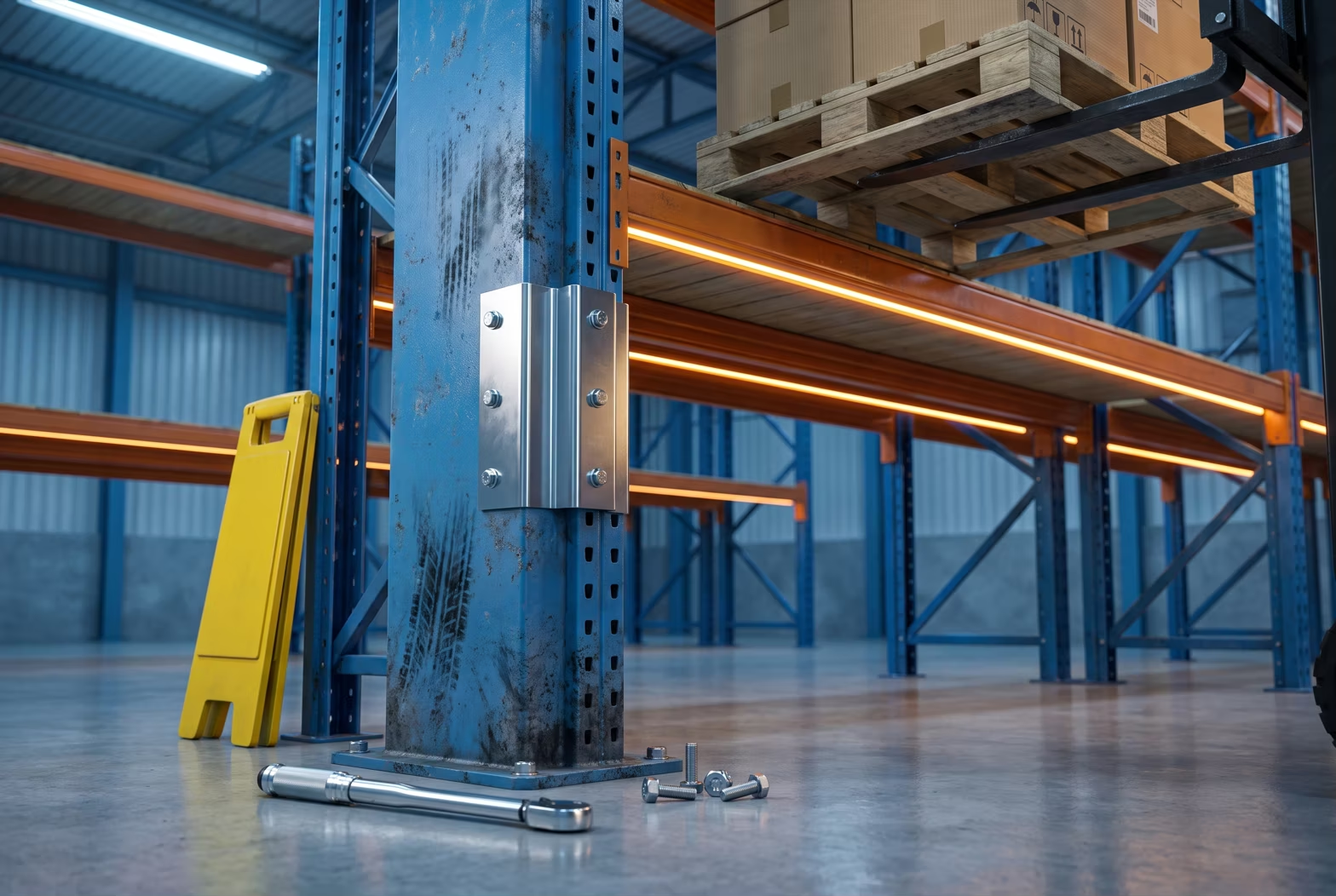
A busy warehouse can triage almost anything except warehouse rack repair. A dented pallet gets set aside for a slower shift. A slow conveyor motor gets a work order and a two-week window, since the cost of that problem on day fourteen is close to the cost on day one inside a normal warehouse operation. A damaged warehouse rack does not sit still the same way, and treating a bent upright or a cracked weld like a routine warehouse maintenance ticket is where the real cost of delaying warehouse rack repair actually begins.
A warehouse rack holds its rated capacity through every connected member working together under load: the uprights, the beams, the bracing, the footplates. Once one member is damaged, the frame is no longer carrying weight the way the warehouse’s engineer intended. Ordinary forklift traffic, vibration, and thermal cycling keep loading that same weakened point while a queued fix sits unscheduled. A dent that would have needed a simple bolt-on rack kit in week one can turn into a bent, work-hardened upright needing full rack replacement by week six. The warehouse ends up paying for that difference in scope, not for its own patience.
The Real Math Behind Fixing It the Week It’s Reported
Look at the two paths side by side. A warehouse rack repair scheduled the same week a finding is logged is a planned job. A technician who already knows the racking type shows up with the right kit, works around one bay’s normal flow, and the warehouse loses a short, controlled window of storage. A rack fix that sits in a queue for a month is answering to whatever the damage has become by the time someone finally gets to it, and that condition is very often worse, not the same. Worse damage means more component replacement, more labor hours inside the warehouse, and a higher chance the job now needs engineering sign-off it never would have needed at the earlier stage.
There is a second cost that never shows up on a repair invoice at all, and it belongs to the warehouse bay itself. A location flagged as damaged is usually restricted the moment it’s identified, whether that restriction is formal or just the caution of a warehouse floor team that knows better than to load a bent frame to capacity. Every week that location sits unfixed is a week of warehouse storage already lost, on top of whatever the eventual rack work costs once it’s finally scheduled. Fixing the finding immediately gets that warehouse capacity back within days. Letting it wait stretches the loss out for as long as the queue takes to clear.
Treating Rack Repair as a Standing Policy, Not a Case-by-Case Call
Warehouses that get this right treat immediate rack repair as warehouse policy, not as a fresh judgment call made every time something gets flagged on the warehouse floor. A standing rule works best here: anything a forklift operator reports, or an inspection flags on a rack, gets scheduled for repair within days, no exceptions. That single rule removes the temptation to eyeball a piece of damage and decide it can probably wait. “Probably wait” is a guess made without full visibility into how the surrounding rack load path is actually behaving under the current damage.
A written policy also removes the friction of re-deciding the same question on every finding. Once a warehouse manager knows that every reported rack issue goes straight to a schedule, there is no internal debate about severity and no informal ranking of the bad racks against the ones that can supposedly wait. The finding gets logged, the repair gets scheduled, and the warehouse moves forward with its racking’s actual condition matching what its own records say it is.
Why an Agnostic Rack Repair Partner Makes an Immediate-Fix Policy Actually Work
Over 30 years of hands-on rack repair experience has shown 1 Stop the same pattern again and again. Warehouses that fix damage immediately are the ones with a repair partner able to respond fast with the correct answer, not just a fast answer of some kind. 1 Stop’s agnostic approach builds every recommendation from the damage itself and the rack’s actual make and model, drawing on repair kits from a wide range of manufacturers rather than one company’s own catalog. That distinction matters directly for a fix-it-now warehouse. A provider tied to a single manufacturer’s kit line has an obvious reason to push its own parts, even when a different manufacturer’s kit, or a straightforward replacement, is the safer answer for that specific damage.
Going straight to one kit manufacturer also skips any real evaluation of whether that kit is even the right category of fix. The correct call can be a bolt-on kit, a different manufacturer’s kit, or full replacement of the damaged member, depending on how it failed and where the damage sits on the frame. A warehouse committed to fixing rack damage immediately needs a partner who will make that call on the merits, not default to whatever happens to be in stock.
That’s the real argument for treating warehouse rack repair as immediate, standing work rather than a queued maintenance item. The cost of delay compounds in ways a routine ticket never does, and a fix only stays cheap while the damage is still small. 1 Stop built its whole model around acting on a finding the same week it is reported. That means full turnkey scheduling, a recommendation built from the damage rather than a catalog, and decades of experience telling the difference between a fix that can safely sit and one that cannot.