








Warehouse Rack Repair: Budgeting for a Cost That Will Happen
Any warehouse running forklifts long enough will eventually need warehouse rack repair, which makes it a planning question rather than a hope-it-doesn’t-happen question.
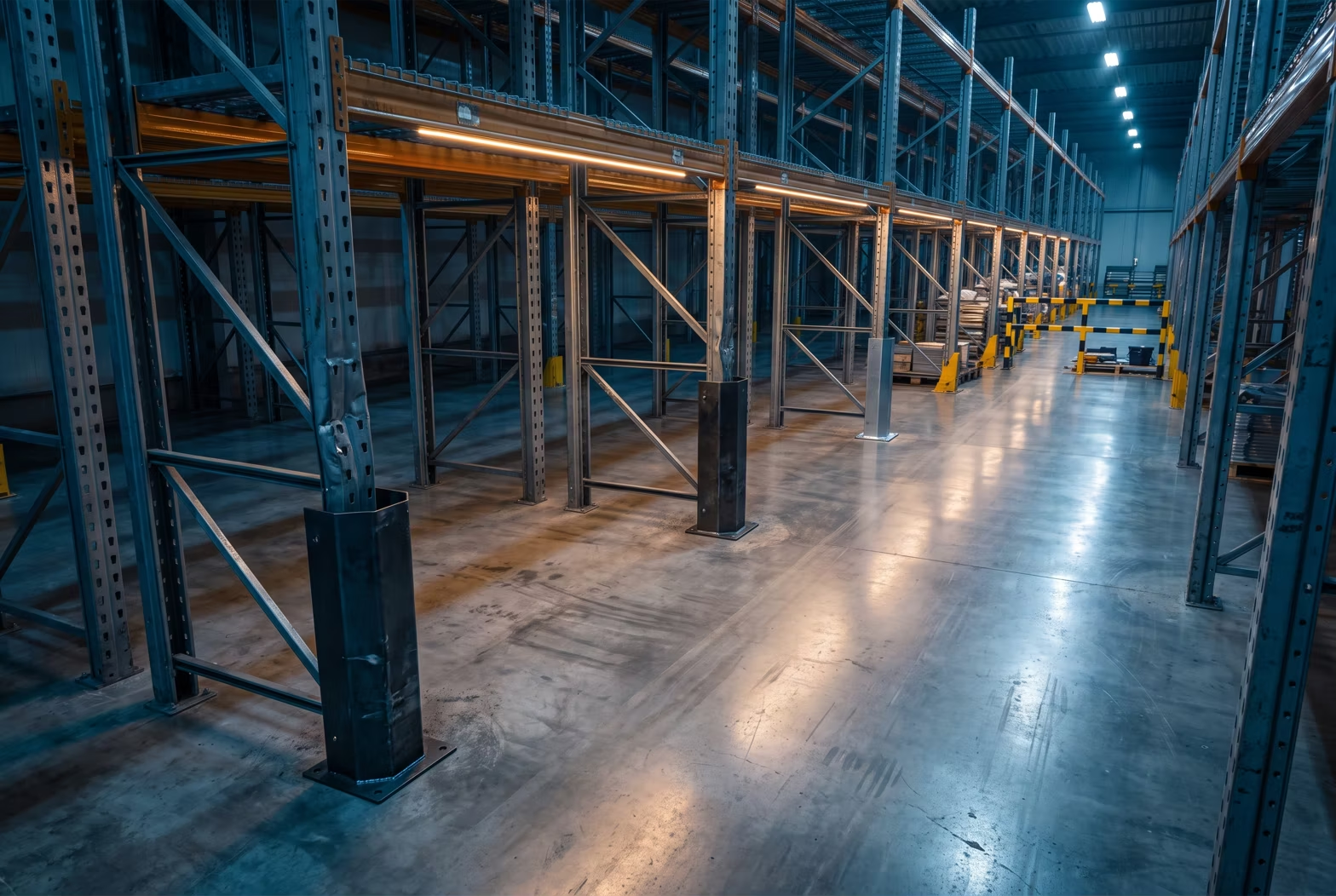
Any warehouse operation running regular forklift traffic will eventually need warehouse rack repair, not as a maybe but as a matter of when and how much. Budgeting for it as an expected operating cost, rather than treating each instance as an unplanned surprise, changes how a warehouse operation absorbs the expense.
A warehouse that budgets nothing for this is not avoiding the expense, only postponing it to a year that operation does not get to pick. A warehouse with even a rough sense of its own rack repair history can budget with real confidence, while a warehouse guessing blind tends to either overspend out of caution or get caught short when the bill actually arrives.
Why Treating Repair as Inevitable Changes the Planning
A warehouse that budgets zero dollars for rack repair every year is not actually avoiding the cost. It is deferring the decision to whichever year the damage becomes unavoidable, usually at the least convenient moment and often at a higher cost than a planned repair would have carried.
Operators running several rack-heavy sites face a version of this same problem at a much larger scale, since deferring repair budgets across several locations at once tends to compound into one single large expense hitting all at once, rather than a steady and predictable cost spread evenly across sites and years the way an ongoing, properly maintained program would actually keep it under control.
Finance teams at a warehouse generally respond better to a predictable annual line item than to an unplanned request that shows up mid-year with no warning. Framing repair as a budgeted operating cost for the warehouse, rather than an exception that needs justifying each time, tends to get approved with far less friction.
Using Inspection History to Set a Realistic Number
An operation with a documented rack inspection history has real data to budget from, based on how often damage has actually occurred and roughly what it has cost to address. A newer warehouse without that history can look to comparable rack setups of similar size, layout, and throughput as a reasonable starting point until its own pattern emerges over time.
A few years of actual rack repair data, even from an operation that budgeted nothing in the past, is considerably more useful for forecasting purposes than a broad industry average figure. The specific traffic patterns and racking mix of one rack fleet rarely match a generic number closely enough to plan around.
Building in a Reserve for the Unplanned
Even a well-maintained rack system with a strong prevention program will occasionally see an impact nobody anticipated. Setting aside a distinct portion of the rack repair budget specifically for unplanned incidents, kept separate from the routine maintenance line, keeps a single unexpected repair from disrupting the rest of an entire year’s carefully laid plan.
Sizing that reserve appropriately is considerably easier once an operation has even just one or two full years of real rack data behind it. A reserve set from a guess tends to run too thin in a bad year and sit unused in a quiet one, while a reserve sized against real history tracks the warehouse’s actual risk more closely.
Where Prevention Spending Fits Into the Same Budget
Column protectors, guard rails, and layout adjustments at a warehouse’s repeat-damage locations are all upfront costs that reduce future repair spending. Budgeting for prevention alongside repair at a warehouse, rather than treating them as entirely separate line items, reflects how closely the two are actually connected.
An operation that spends a modest amount on protection at its highest-risk rack columns typically sees that spending returned several times over in avoided repairs, once a few years of data are available to compare against. Treating prevention as a cost center separate from repair tends to undercount what a warehouse is actually saving.
Why Budgeting Depends on an Unbiased View of the Options
A rack repair budget built around one manufacturer’s pricing does not reflect the actual range of options available for a given operation’s warehouse damage. 1 Stop’s decades of experience support an agnostic view across manufacturers and repair methods when helping any warehouse set a realistic budget. A provider selling a single kit line has a reason to base every rack estimate on their own product regardless of fit. Depending on the rack damage patterns a warehouse typically sees, a different manufacturer’s kit, or full replacement in some cases, can be the more cost-effective line item to budget around. Building a budget that reflects reality takes a partner without one price list to work from.
Planning Around a Cost That Isn’t Going Away
1 Stop helps warehouse operators set realistic rack budgets based on their actual repair history and risk factors, rather than a generic industry estimate. That guidance reflects decades of seeing what rack repair costs actually look like across different types and sizes of warehouse operations.
1 Stop helps a warehouse treat warehouse rack repair as a manageable, predictable line item budgeted for in advance, rather than the emergency expense it becomes every time when left unbudgeted.