








Warehouse Rack Repair: What Waiting on a Fix Actually Costs
Delaying a fix does not freeze the cost of warehouse rack repair in place, since the damage, the risk, and the eventual bill all keep moving while the decision sits unmade.
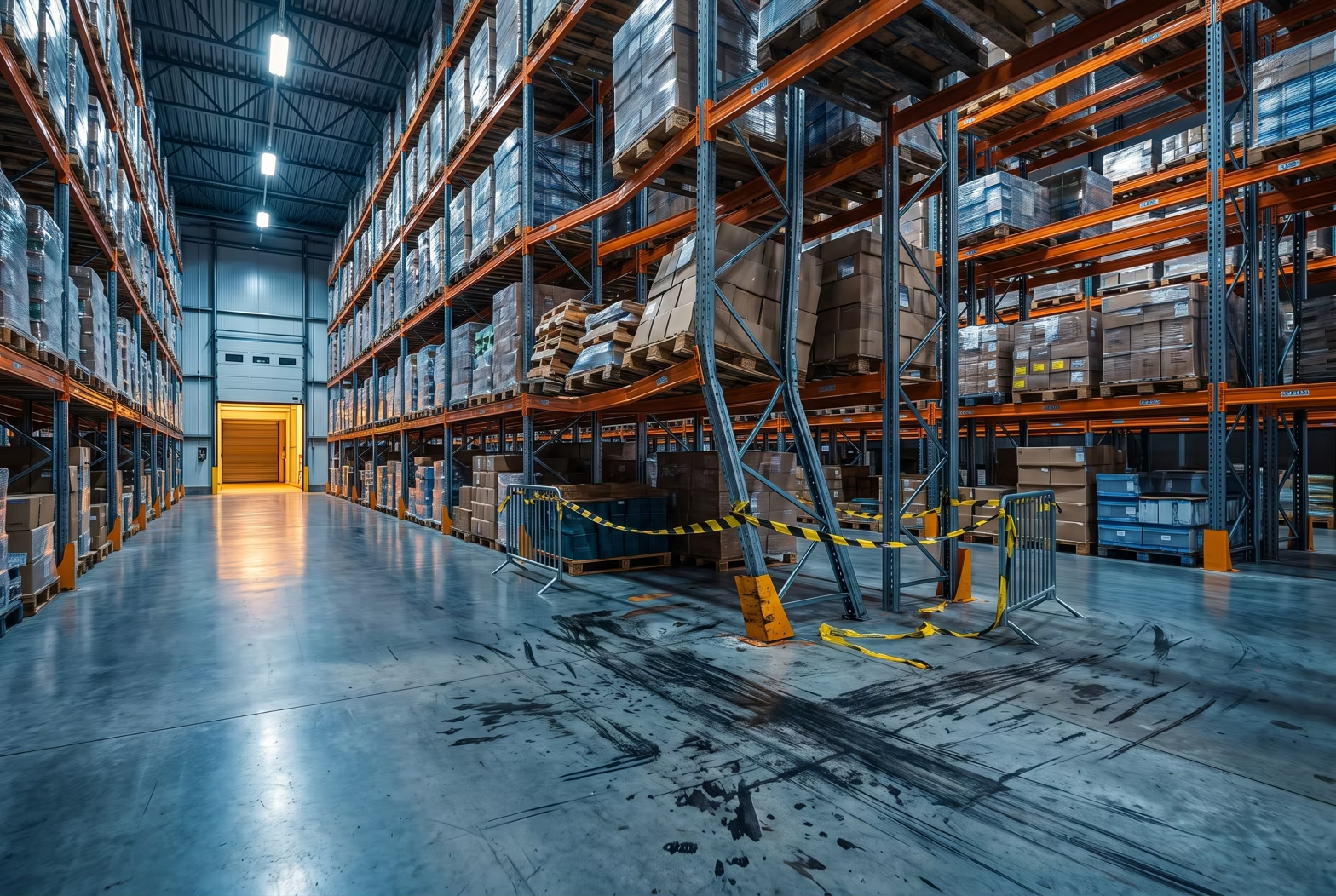
Warehouse rack repair postponed rarely stays the same size job it was on day one. Steel does not heal on its own, and the underlying conditions that caused the first damage are usually still fully in place, working against a warehouse rack column that already has less margin than it started with.
A warehouse tempted to defer a known finding is making a bet against physics, and physics usually wins. A warehouse that acts promptly keeps the job small; a warehouse that waits typically does not get to choose how much bigger the job becomes by the time it finally gets addressed.
Damage Compounds, It Doesn’t Stay Still
A bowed rack column left in service continues carrying load through a compromised path, and the same traffic pattern that caused the original strike often causes a second one before the first is addressed. A rack fix that would have handled a single-column issue on day one can become a two- or three-column job by the time it finally gets scheduled months later.
The math rarely moves in a warehouse’s favor the longer it waits to act on a known rack finding. A single delayed rack repair does not just stay the same size and get more expensive later. It tends to grow in scope precisely because nothing about the original cause has changed.
The Cost of an Emergency Job Versus a Planned One
A rack job scheduled in advance fits into a warehouse’s normal operating rhythm. One triggered by a failure or a safety shutdown does not. It typically comes with rush parts sourcing, after-hours labor, and lost storage capacity, all landing at exactly the moment the warehouse can least afford it.
Staff time gets pulled into an emergency repair in ways a properly planned one almost never requires of anyone involved. Someone has to relocate product on short notice, coordinate with the crew on an unplanned schedule, and manage whatever operational workaround the warehouse needs while the bay is down, none of which shows up anywhere as a separate line item on the invoice itself, even though every bit of it is a real cost created directly by the delay.
Overtime and expedited freight charges alone can meaningfully change the total bill a warehouse pays between the two scenarios. A part shipped on a normal schedule and a part rushed to meet an emergency timeline are not priced the same way for a warehouse, even when it is the identical component going into the identical rack column.
The Liability Sitting Behind an Unaddressed Finding
A documented rack finding that goes unaddressed is a different situation than damage nobody noticed. Once a rack problem has been identified and recorded, whether through an inspection report or a warehouse’s own internal note, the responsibility to act on it exists for a warehouse whether or not the work actually happens.
This is part of why a written record matters even before the work is scheduled. It shows a warehouse’s finding was taken seriously at the time, and it gives a clear starting point for whoever eventually acts on it.
Lost Storage Capacity While the Decision Sits
A bay tagged out of service, whether formally or informally, is capacity a warehouse cannot use until the work happens. The longer that bay sits idle waiting on a decision, the more storage capacity a warehouse is effectively operating without, on top of whatever the eventual repair itself costs.
Nearby rack bays often absorb the overflow in the meantime, which spreads the disruption beyond the one damaged spot in that warehouse. Product that would normally sit in the tagged bay ends up stored less efficiently elsewhere, adding a quieter operational cost for a warehouse that rarely shows up on the same invoice as the eventual fix.
Why the Cost Calculation Needs an Unbiased Repair Estimate
Weighing the cost of ignoring damage against the cost of fixing it only works for a warehouse if the estimate itself is unbiased. 1 Stop’s over 30 years of experience support an agnostic estimate that reflects the actual repair the damage calls for, not whichever product a provider happens to sell. A provider committed to one kit line has a reason to quote that kit for any warehouse regardless of whether it is the most cost-effective fit. Depending on the damage, a different manufacturer’s kit, or in some cases replacement, can be the more economical answer than the default option. Getting an estimate that holds up takes a partner without a product to push.
Making the Decision Before the Damage Makes It for You
1 Stop lays out these compounding costs plainly during an assessment, so a warehouse decision-maker is weighing the actual tradeoff, not just the sticker price of the fix itself. That framing comes from decades of seeing what an unaddressed warehouse finding eventually turns into.
A warehouse comparing this year’s smaller repair against next year’s larger one rarely finds the math favors waiting, no matter how the specific numbers for that warehouse actually shake out.
The comparison worth running before deciding is this year’s quoted repair against a rough estimate of what the same finding would cost as an emergency call twelve months from now, factoring in expedited parts, after-hours labor, and the storage capacity lost in between. Very few findings survive that comparison looking like they were worth deferring.
Warehouse rack repair addressed on 1 Stop’s recommended timeline is almost always the smaller job and the smaller bill. Waiting rarely makes either one shrink.