








Warehouse Rack Repair: Why the Load Plaque Needs a Second Look After Repair
A completed repair and a correctly labeled repair are not automatically the same thing, and warehouse rack repair is not finished until the load plaque reflects what was actually done.
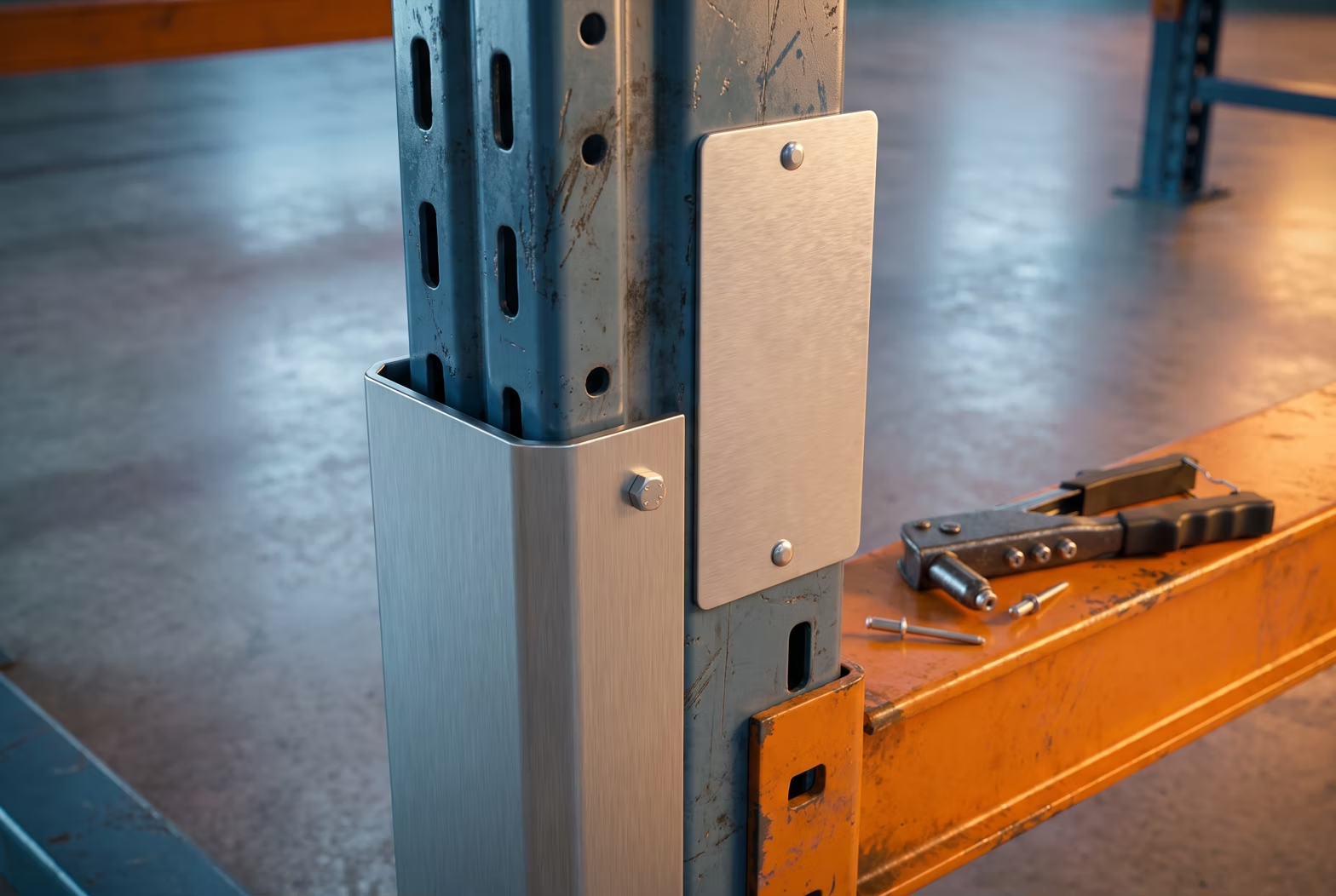
Warehouse rack repair that restores a rack column’s shape without confirming what that column is now rated to carry leaves a gap between what the plaque claims and what the steel has actually been verified to hold. Closing that gap is part of finishing the job for a warehouse, not an optional extra step.
A warehouse auditing its own rack fleet for the first time in years should treat plaque accuracy as its own separate checklist item, not something to assume is still correct.
A warehouse relying on an outdated plaque is trusting a number that may no longer reflect what its own racking can actually carry, a gap that matters most in a fully loaded warehouse. Any warehouse that has had repair work done in the past should confirm those plaques were updated at the time, since a warehouse operating on stale information is taking on risk it does not know it has.
What the Load Plaque Is Actually Supposed to Represent
Rack Manufacturers Institute guidance describes a load capacity plaque as representing a warehouse rack system’s permissible load as designed. Where a warehouse rack system is modified in a way that invalidates the original plaque information, that guidance calls for the plaque to be updated to reflect the new configuration.
Why a Repair Can Invalidate the Original Number
Work that changes bracing, beam spacing, or the column’s cross-section in any way departs from the exact configuration a warehouse’s original plaque was calculated against. Even work intended to restore original conditions exactly can introduce small variations for a warehouse, depending on the method used and what parts were actually available.
This is easy to overlook precisely because the intent was restoration, not modification. Nobody sets out to change the rating during a repair, but a variation that was never intended still needs to be checked rather than assumed away.
Substitute rack parts are a common source of this kind of unintended variation. When an exact original component is not available and a close equivalent gets used instead, even a component from the same manufacturer’s own current catalog can differ enough from the original to change the calculation, simply because product lines are revised over the years between when a rack was installed and when it eventually needs attention.
Why “It Looks the Same” Is Not Verification
A repaired rack column can look visually identical to its pre-damage condition without the underlying engineering having been confirmed to match. Capacity is a calculated property, not a visual one. A plaque update depends on verifying the finished work against engineering specifications rather than a visual comparison.
Paint and finish work can make this even harder to catch informally. A freshly repaired and repainted rack column can look better than the surrounding, unrepaired sections of the same run, which makes an untrained visual check actively misleading rather than just unreliable.
A warehouse manager walking past a freshly repaired column has no way to tell, just by looking, whether the underlying rating still holds. That is precisely why the confirmation has to happen at the engineering level rather than being left to a visual sign-off.
What Verification Actually Involves
Confirming the repaired configuration against the manufacturer’s original engineering, or against fresh engineering analysis where the original specifications are not available, establishes what a rack column can now actually be trusted to carry. Only once that is confirmed does an accurate plaque, whether the original number or an adjusted one, get applied.
This same process applies to any warehouse whether the fix was a bolt-on kit or a full section replacement. The method used to fix the column does not exempt a warehouse from having its resulting capacity confirmed.
Placement of the updated plaque matters to a warehouse too, not just its accuracy. A plaque left in its original position after work that changed a warehouse column’s configuration can point a reader toward the wrong level or the wrong bay entirely, so confirming the plaque is both correct and still attached where it needs to be is part of finishing the job.
Why Re-Verifying Capacity Needs an Unbiased Starting Point
Re-verifying a warehouse rack’s capacity after repair only means something if the fix itself was chosen on its actual merits, not on which product a provider happened to be selling. 1 Stop’s over 30 years of experience support an agnostic recommendation before capacity gets re-verified against it. A provider committed to one manufacturer’s kit line has a reason to make the repair fit the product rather than the other way around. Depending on the damage, a different manufacturer’s kit, or full replacement, can be what actually restores the original rating. Reaching that outcome takes a partner without a product to protect.
Treating the Label as Part of the Repair, Not an Afterthought
1 Stop treats capacity verification and label accuracy as part of completing the job for a warehouse, not a separate step that happens later if at all. That standard reflects decades of understanding that work without a verified rating is unfinished, regardless of how the steel looks in that warehouse.
The fastest way to settle whether a given plaque is still accurate is checking it against the rack’s own repair history, not against a generic assumption about how long plaques typically stay valid. A column repaired twice in the last five years deserves a fresh look regardless of how recent the last verification was; one untouched since installation may still be carrying its original, accurate number.
1 Stop ends every warehouse rack repair with a confirmed, accurate load plaque, not just a finished fix, so a warehouse is never left with the real question of what that column can now carry unanswered.