








Warehouse Rack Repair: When Permitting and Engineering Sign-Off Apply
Not every repair needs a permit, but warehouse rack repair that changes height, configuration, or storage density can cross into territory where local permitting and engineered sign-off actually apply.
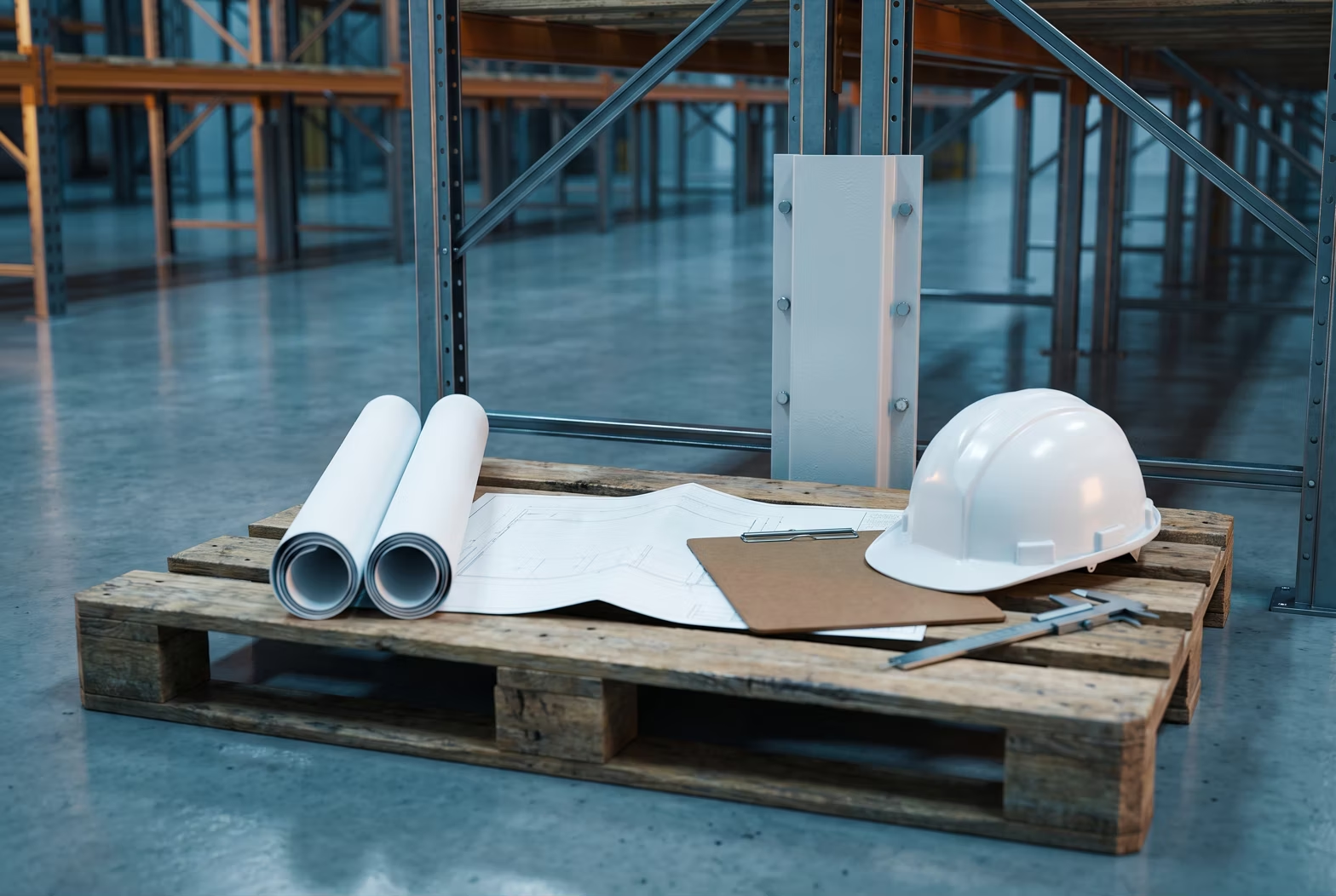
Warehouse rack repair that simply restores a column to its original condition rarely triggers a new permit review, since nothing about the rack’s height, configuration, or rated storage has changed. Altering any of those things is a different situation for a warehouse, and knowing the difference matters before work begins.
A growing warehouse expanding its rack storage height or density needs to think about this well before the crew shows up, since that same operation’s permitting history shapes what a future repair can and cannot do without fresh review. A warehouse that has never had to think about this before still benefits from confirming it with a warehouse-level record now.
When a Straightforward Repair Stays Straightforward
A bolt-on kit restoring a warehouse rack column to its original manufacturer specification, in the same configuration and at the same height, is generally a like-for-like fix rather than a modification. Most jurisdictions treat this kind of work the same way they treat routine maintenance, without a fresh permit review.
Documenting that the rack repair was actually like-for-like still matters, even when no permit review is triggered. A record showing the confirmed specification the work matched gives a warehouse something to point to later if the question ever comes up.
When Storage Height or Density Changes the Picture
Local fire departments commonly require a separate high-piled storage permit once combustible rack storage exceeds roughly twelve feet in height within an area over 500 square feet, with lower thresholds for higher-hazard commodities. Work that increases a warehouse’s rack height, reconfigures a layout, or changes storage density enough to cross one of these thresholds can retrigger that permit review, even where the original installation never needed one.
Exact thresholds vary by jurisdiction, which is why a warehouse’s rack layout gets checked against the specific local requirements rather than a single assumed number. A rack job that would be routine in one city can brush up against a permit trigger in another, purely because of how that jurisdiction sets its own thresholds.
Commodity classification factors into this alongside rack height and floor area. A warehouse storing higher-hazard materials on tall rack systems, such as certain plastics or flammable liquids, can trigger review at a lower height threshold than one storing ordinary palletized goods, so the same job that stays well clear of a trigger in one warehouse can sit right at the edge of one in a warehouse storing different products.
Why Load Rating Changes Call for Engineering Sign-Off
Rack Manufacturers Institute guidance holds that a load capacity plaque represents the rack’s rated capacity as designed, and that any modification invalidating that plaque requires an updated one. Work on a warehouse rack that changes bracing, beam configuration, or column strength in a way that affects the original rating needs engineering verification behind the new plaque, not just a physical fix.
A repair that restores original specifications exactly does not usually trigger this. One that improves on the original design is different. So is one that has to depart from it because an exact match is no longer available. Both are where the plaque needs a fresh look rather than an assumption that the old number still applies.
Why This Is Worth Confirming Before Work Starts, Not After
Work completed on a warehouse rack without checking whether it crosses a permitting or engineering threshold can leave the facility out of step with local requirements it never intended to trigger. Confirming this ahead of time, as part of the same assessment that scopes the job itself, avoids that gap entirely for a warehouse.
This matters most on a warehouse that has already had work done in stages over the years. Several small repairs, each individually minor, can add up to a meaningfully different configuration than what the original permit covered, even though no single repair looked like a trigger on its own.
Why Sign-Off Should Follow an Unbiased Repair Choice, Not a Sales Pitch
Engineering sign-off is only meaningful to a warehouse if it follows a repair choice made on its own merits, not one steered toward a single manufacturer’s product from the start. 1 Stop’s decades of experience support an agnostic recommendation before any permitting or sign-off work begins. A provider selling one kit line has a reason to reach a conclusion that favors their product, then seek sign-off for it after the fact. Depending on the damage, a different manufacturer’s kit, or full replacement, is sometimes the answer permitting requirements actually point to. Getting that sequence right takes a partner without a predetermined outcome to defend.
Bringing Permitting Into the Repair Process From the Start
1 Stop’s own site survey and permitting experience covers this exact territory for new warehouse installations. That same process applies for a warehouse when the work crosses into modification rather than staying purely like-for-like, built on decades of navigating local permitting and engineering requirements across warehouse jurisdictions of every kind.
A warehouse unsure of its own permitting history should track that down proactively, since one facility’s local jurisdiction sets thresholds a neighboring warehouse’s jurisdiction may not share.
The record worth a warehouse keeping is simple: a folder with the original permit, the load plaque history, and a running log of every repair completed since. When a question comes up, whether from an insurance audit or a fire marshal’s routine visit, that folder is the difference between a five-minute conversation and a multi-week scramble to reconstruct a history nobody wrote down.
1 Stop checks every warehouse rack repair that changes original specifications against local permitting and engineering requirements before the warehouse’s work is finished, not after it is discovered too late.