








Warehouse Rack Repair: Repairing Narrow Aisle Systems at Height
Narrow aisle racking pushes storage upward instead of outward, and warehouse rack repair on these systems has to account for height and access in a way a low-rise selective rack never requires.
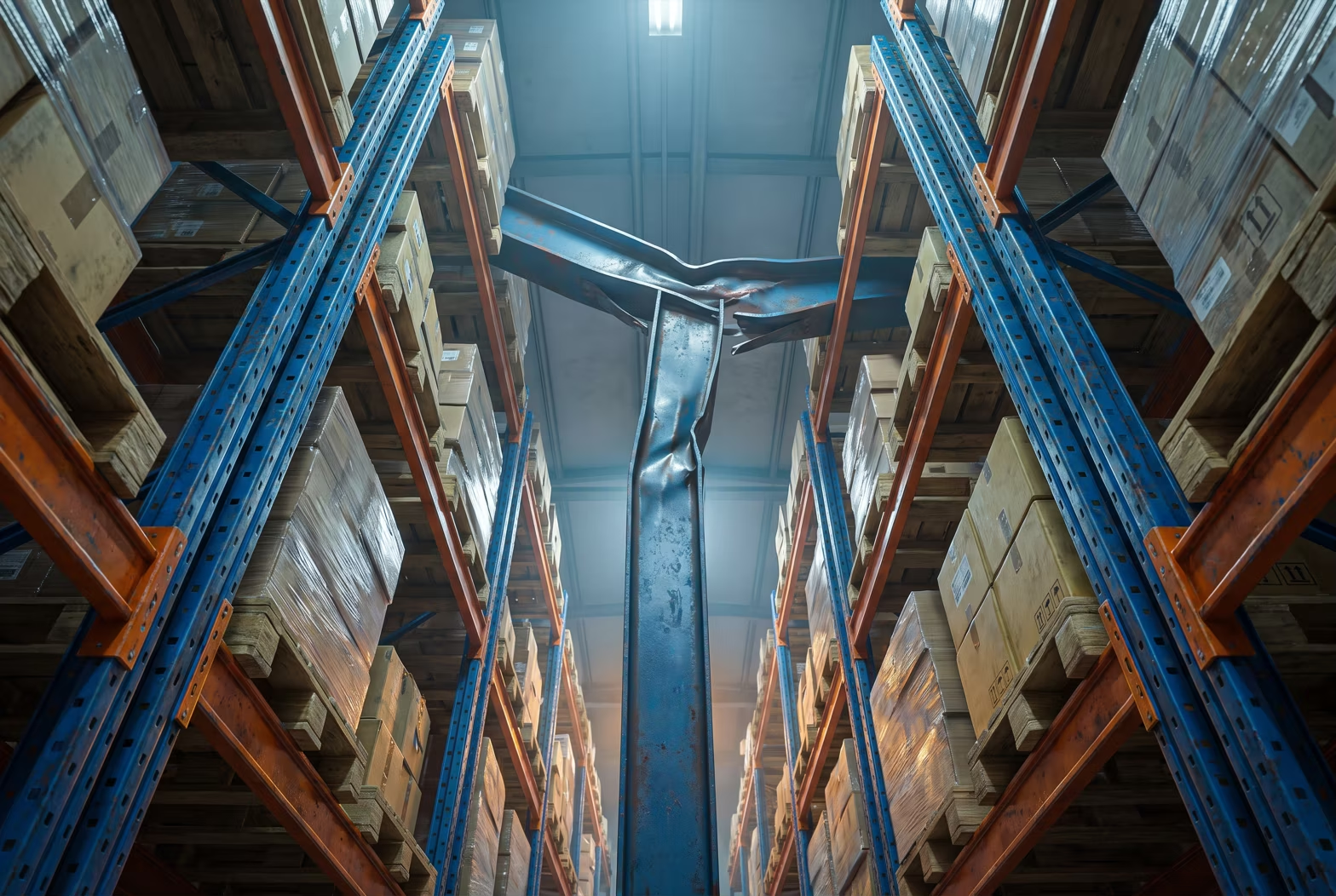
Warehouse rack repair on narrow aisle racking regularly means working thirty feet or more above the floor, inside an aisle built no wider than the specialized forklifts that service it. Both of those facts shape the job before a single tool comes out.
A high-cube warehouse chasing maximum storage density per square foot takes on height-related rack complexity a lower-rise operation never faces. That warehouse needs specialized access equipment and a crew comfortable working at height, not a generic approach borrowed from a single-story layout.
Why Height Changes the Stakes of Any Damage
A rack column in a warehouse supporting storage well past the thirty-foot mark carries a considerably longer, more consequential load path than a comparable low-rise column of the exact same gauge. The same visible dent is a more serious finding for a warehouse the higher up it sits, since more stacked weight is riding on the section beneath the damage point.
Guidance rail condition at floor level matters considerably more in these warehouse systems too, since the aisle’s narrow tolerance depends entirely on the guide rails staying properly and consistently aligned. Damage to a guidance rail, not just the rack columns themselves, can throw off how precisely a warehouse’s specialized equipment tracks through the aisle at height.
Why the Aisle Itself Limits Equipment Options
Narrow aisles, sometimes as tight as sixty-five inches, are built in a warehouse for specific turret trucks or swingmast forklifts and were never designed to accommodate the wider equipment a repair crew might otherwise bring in. Standard scissor lifts or scaffolding often cannot fit a warehouse aisle this width at all. That narrows the realistic access options down to the same specialized equipment the warehouse already runs day to day, or purpose-built access equipment specifically sized to fit that particular aisle.
Rental availability for that kind of specialized warehouse equipment is not always immediate either, which means the access equipment itself can end up sitting on the same critical path as a custom-engineered part when it comes to how quickly the job can actually get underway on site.
Coordinating with a warehouse’s own equipment and staff becomes part of the job in a facility built this way. A job that needs to borrow a warehouse’s own turret truck for access has to work around that facility’s normal operating schedule, not just the crew’s own availability.
Certification and training requirements add yet another layer to that overall warehouse coordination effort. Operating a warehouse’s own turret truck or swingmast equipment often requires training specific to that machine on that particular warehouse floor, which means the crew may need a certified warehouse operator involved directly, rather than simply borrowing the equipment and running it themselves for the day. Scheduling that operator’s time becomes as much a part of the plan as scheduling the crew itself.
Why Damage at Height Is Easy to Miss From the Floor
A dent thirty feet up in a warehouse is far harder for a crew to spot from ground level than the same damage on a rack column at eye height. Routine warehouse walkthroughs conducted from the aisle floor can miss upper-level damage entirely. That is part of why a narrow aisle warehouse benefits from a rack inspection process that actually gets eyes on the upper sections, not just the parts visible from below.
Why the Repair Plan Has to Match the Access Reality
Confirming what equipment can actually reach the damaged section, and scheduling around whatever specialized access that requires, happens before the repair method itself gets finalized. A rack kit that would install in twenty minutes at floor level can take considerably longer once reaching it thirty feet up is factored in.
Fall protection requirements add a further layer of planning that a low-rise rack job does not carry. Working at that height means the crew’s own safety equipment and procedures are as much a part of the job as the kit itself.
Why Height and Access Call for an Unbiased Comparison
Narrow aisle rack systems combine height with tight access, both of which narrow which repair methods are actually practical. 1 Stop’s over 30 years of experience support an agnostic comparison across manufacturers and repair approaches suited to tall, narrow-aisle configurations. A provider selling a single kit line may not carry anything engineered for the height or access involved. Depending on the damage, a different manufacturer’s kit, or full replacement, can be the answer that actually works at height. Reaching it takes a partner weighing every practical option, not one product.
Bringing the Right Approach to Height and Confined Access
1 Stop plans narrow aisle rack repairs around both the structural assessment and the access reality of a tall, tightly built system, drawing on decades of servicing high-density storage where height is the whole point of the design.
A warehouse considering this configuration for the first time should budget for specialized rack access equipment from the outset, rather than discovering the need for it only once a repair comes up.
The budget line worth a warehouse planning for specifically is the access equipment itself, not just the repair kit. A specialized lift rated for a sixty-five-inch warehouse aisle can cost more to rent for a single job than the repair it enables, and knowing that number ahead of time keeps a narrow-aisle warehouse from treating it as a surprise add-on when the first call actually comes in.
1 Stop plans warehouse rack repair at height in a narrow aisle around how the crew actually reaches the damage, not just what the damage requires once someone gets there.