








Warehouse Rack Repair: Repair Access Inside Drive-In and Drive-Thru Lanes
A forklift driving directly into the storage lane is what makes drive-in and drive-thru racking so space-efficient, and it is also what makes warehouse rack repair inside that lane a different kind of job.
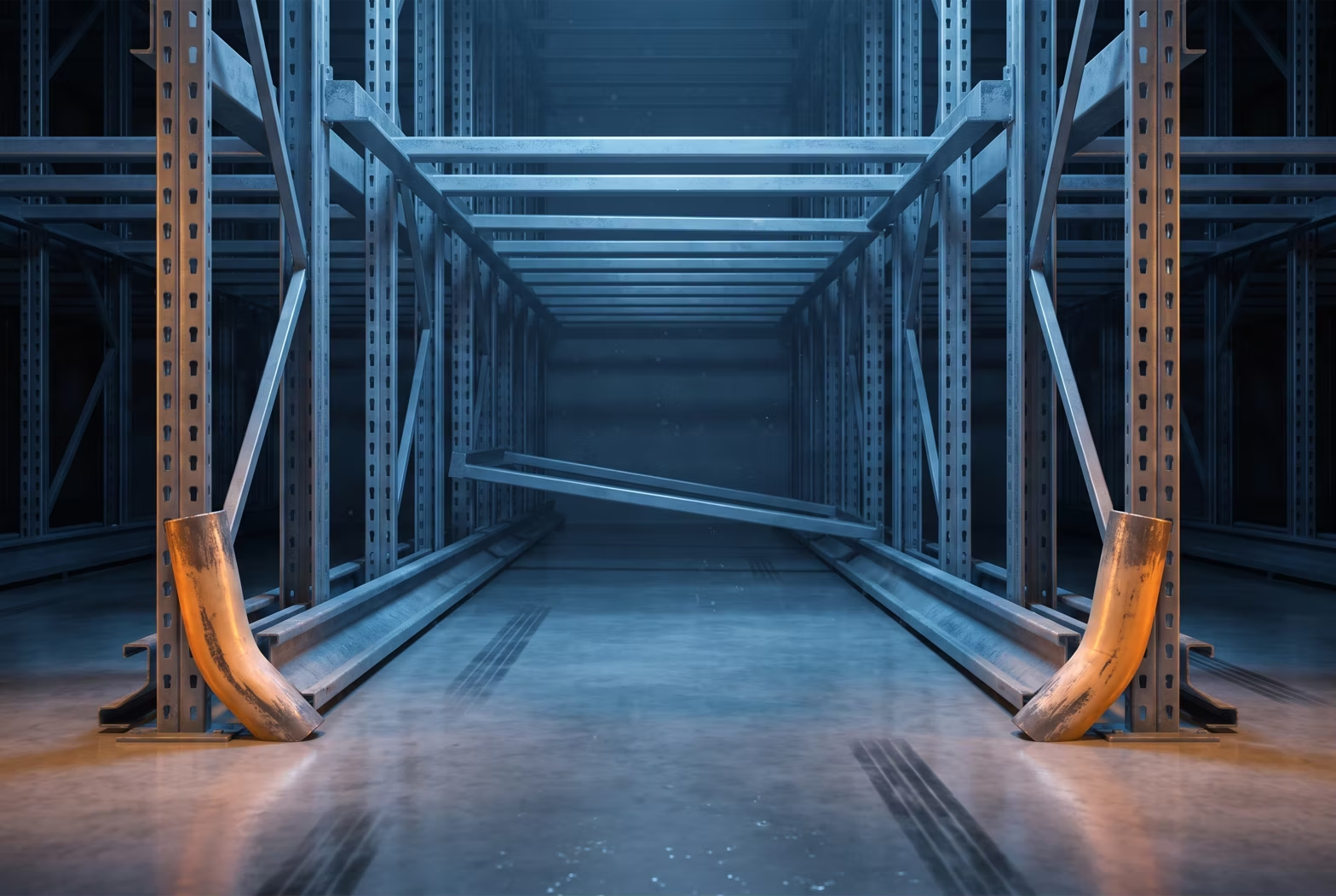
Warehouse rack repair on drive-in and drive-thru racking happens inside the same lane a forklift drives through to load and unload pallets, rather than from an adjacent aisle. That single fact changes both how damage happens and how a rack repair crew reaches it.
A high-density warehouse choosing this storage style accepts a tradeoff a lower-density warehouse never has to consider, trading floor-space efficiency for tighter forklift clearances. That warehouse benefits from a repair partner who understands the access constraints these systems create, rather than one applying a standard-aisle warehouse’s assumptions to a very different layout.
Why Damage Concentrates on the Rail Guides
Drive-in and drive-thru systems in a warehouse use rail guides mounted on the rack frame to support pallets directly, rather than beams spanning between columns. Forklifts operating inside a narrow, confined warehouse lane clip these rail guides and the columns supporting them far more often than they would in a standard open aisle, since the equipment is driving between the rack frame members rather than past them.
Driver visibility inside a warehouse plays a large part in this. A forklift backing out of a deep drive-in lane has less room in a warehouse to judge clearance than one operating in an open aisle. That is part of why damage tends to concentrate at entry points and the first several positions inside the lane.
Newer drivers, or anyone less familiar with a specific facility’s own particular lane widths and layout, tend to account for a disproportionate share of a warehouse’s entry-point damage overall. A driver who has run the same drive-in rack lanes for years develops a feel for exactly how much clearance they have, which is precisely the judgment a newer driver has not yet had the chance to build through repeated, ordinary daily experience.
Why Deep Lane Positions Are Harder to Reach
A drive-in lane can extend many pallet positions deep into a warehouse, with only a single entry and exit point. Damage near the back of a deep lane means threading equipment and materials through the warehouse past every pallet position between the entrance and the repair point. Clearing enough of the lane to gain access, in a warehouse of any real depth, goes well beyond what a repair near the front requires.
Lighting and visibility inside a deep warehouse lane add to the difficulty. A crew working several positions back from the entrance is often working with less natural light and less room to maneuver than a rack repair on an open selective aisle, which affects how the work gets staged as much as how long it takes.
Why One Damaged Rail Affects the Whole Lane
A rail guide runs the full depth of the entire warehouse lane, supporting every single pallet stacked along its whole length. Damage anywhere along that rail can affect pallet support at every position behind it in a warehouse, not just the specific spot where the impact happened. That is different from a selective rack in a standard warehouse, where each beam level is independent of the ones around it.
A short section of damaged rack rail near the entrance can therefore compromise support well beyond where it looks like the problem sits, which is why an assessment traces the rack rail’s full run rather than stopping at the first visible mark.
Why Emptying the Lane Is Often Unavoidable Here
Because drive-in and drive-thru racking in a warehouse store pallets directly against the rail rather than on removable beams, reaching a damaged rail section frequently requires clearing pallets out of its path first. This is one of the rack storage types where minimizing disruption is harder to achieve. Planning the rack repair around the lane’s actual load pattern matters more here than it does on beam-based systems.
A lane running first-in-first-out through a drive-thru configuration adds a scheduling wrinkle of its own for a warehouse. Clearing it for repair can interrupt an active rotation cycle, which is worth flagging to a warehouse manager before work begins rather than discovering mid-repair.
Why High-Density Systems Call for an Unbiased Repair Path
Drive-in and drive-thru rack systems limit access in ways that narrow the realistic repair options, which makes an unbiased comparison across what remains especially valuable. 1 Stop’s decades of experience support an agnostic view across manufacturers and methods suited to high-density, single-entry systems. A provider selling one rack kit line may not have an answer that actually fits the access constraints involved. Depending on the damage and the access available, a different manufacturer’s kit, or full replacement, can be the more workable answer. Finding it takes a partner considering the full range of options, not one.
Working the System as It Is Actually Built
1 Stop assesses drive-in and drive-thru damage in any warehouse with the lane’s specific rail and column configuration in mind from the start, drawing on decades of servicing the high-density storage systems these racks are built to provide.
A warehouse weighing this storage type against a lower-density alternative should factor the access tradeoff into that decision directly, not treat it as a warehouse-floor detail to work out later.
The specifics worth asking for are the rail’s full-run inspection method and how the provider stages a deep-lane job, since both determine whether a single damaged rail section turns into a one-day fix or a week of interrupted rotation. A provider who can answer neither in detail hasn’t worked enough of these systems to know the difference.
1 Stop’s warehouse rack repair inside a drive-in or drive-thru lane accounts for how far the damage runs along the rail, not just the single point where it was first noticed.