








Warehouse Rack Repair: Where Cantilever Systems Actually Fail
Cantilever racking carries long loads on unsupported arms rather than between two columns, which changes both how it gets damaged and how warehouse rack repair has to approach the fix.
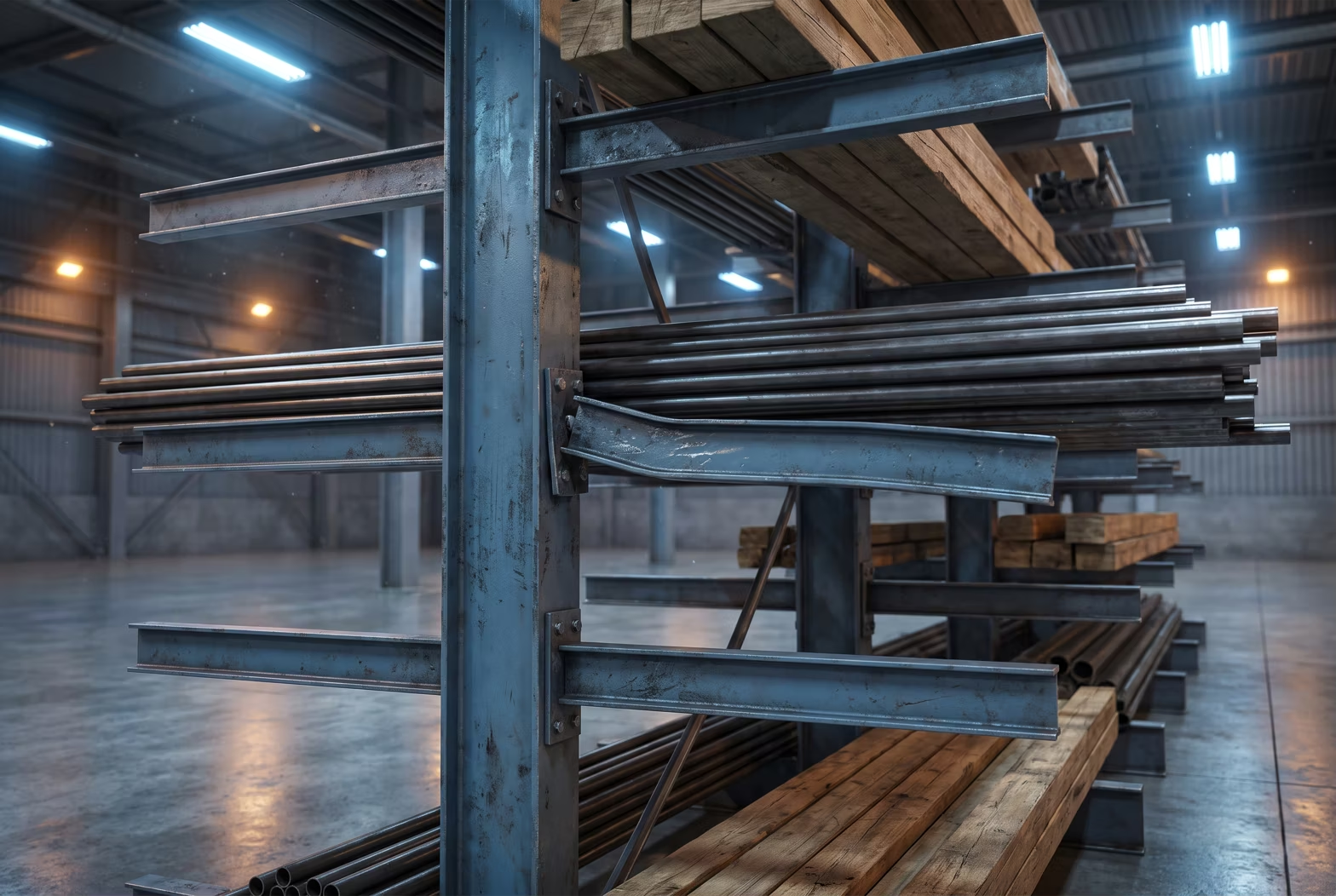
Warehouse rack repair on a cantilever system deals with a structure built differently from any palletized rack type. Open columns in a warehouse support arms extending out to one or both sides, carrying long or awkwardly shaped loads like lumber, piping, or coiled material with nothing supporting the far end.
A lumber yard, a pipe distributor, or any other warehouse storing long, awkward material runs a very different risk profile than a warehouse handling standard pallets, and that warehouse needs a repair partner who has actually worked cantilever systems, not just palletized ones. Every warehouse storing this kind of material eventually needs this expertise.
Why the Arms Are the Most Common Failure Point
An arm carries its load in bending, unsupported at the far end, which makes it the component most exposed to overload and impact damage in any warehouse running these systems. A bent or drooping arm is often the first visible sign of a problem for a warehouse, whether from a load exceeding the arm’s rating or repeated impact from loading and unloading long material.
Arm damage is also easy for a warehouse crew to underestimate visually. A slight droop near the base can represent more lost capacity than the same droop near the tip, since the base is where the arm’s bending stress is highest.
Multiple arms mounted on the same single column complicate a visual read even further, since a small droop on just one arm is easy to miss sitting next to several others that remain level and unloaded nearby. Measuring each arm against the rack column’s own original specification, rather than comparing arms to each other by eye, catches a droop that a side-by-side glance would miss entirely, especially on a rack column carrying several arms at slightly different heights.
Why the Column Still Matters Just as Much
The vertical column in a warehouse absorbs the combined bending load from every arm attached to it, distributed down its height. Damage to the rack column, not just an individual arm, affects every arm mounted above the point of damage, since the rack column is what carries all of that accumulated load to the base.
This is why a rack column strike on a cantilever system in a warehouse tends to have wider consequences than the same strike on a palletized rack. A single column here often supports several arms and everything a warehouse has loaded on them, not one beam level in isolation.
Why Loading Style Drives So Much of the Damage
Cantilever systems in a warehouse handle material that does not sit neatly on a pallet, which means loading often happens by hand, by crane, or with specialized attachments rather than a standard forklift fork. Material sliding, swinging, or being set down unevenly during warehouse loading is a common cause of arm and column damage that looks different from a typical forklift strike on a palletized rack.
Long material also concentrates weight differently in a warehouse than a pallet does. A load resting unevenly across two or three arms can put far more stress on one arm than the others, even when the total weight is well within the system’s overall rating. That is a failure mode a palletized rack simply does not have.
Why Repair Has to Match the Specific Arm and Column
Arm length, vertical spacing, and column height all vary considerably by manufacturer and by the specific application a warehouse cantilever system was designed for. A rack repair or replacement arm has to match the confirmed specifications of the system in place, not a generic cantilever profile, since a mismatched arm changes both the load rating and how it seats against the rack column.
Base configuration adds another variable for a warehouse. A cantilever base built for a single-sided outdoor yard carries different wind and foundation considerations than an indoor double-sided system, and a rack repair has to account for whichever base configuration the specific system actually uses rather than assuming one standard base applies everywhere.
Why Long-Load Systems Deserve the Same Unbiased Standard
Cantilever racking carries its own failure points in a warehouse, and the repair chosen for it should follow the same unbiased standard as any other system. 1 Stop’s over 30 years of experience support an agnostic comparison across cantilever manufacturers and repair methods. A provider selling a single kit line may not carry anything engineered for a cantilever arm or upright at all. Depending on the damage, a different manufacturer’s kit, or full replacement, can be the appropriate answer for a long-load system. Reaching that answer takes a partner without one product line to default to.
Bringing the Same Standard to an Unusual System
1 Stop applies the same identification-first approach to cantilever repair in a warehouse as it does to palletized racking. Manufacturer, arm rating, and column specification all get confirmed before any fix is recommended, built on decades of servicing the long-load storage applications cantilever systems are designed for.
A lumber yard, pipe distributor, or similar warehouse should specifically confirm a provider’s cantilever experience, since that experience does not automatically carry over from palletized-rack work at a more typical warehouse.
The question worth asking directly is how many cantilever jobs a provider has actually completed in the last year, not just whether they list the service on a website. A provider whose cantilever work is occasional treats it as a special case; one whose crews handle it regularly has already worked out the arm-versus-column judgment calls this piece covers, rather than relearning them on-site.
1 Stop’s warehouse rack repair on cantilever racking restores both the arm and the rack column to their confirmed original ratings, not just to a straightened appearance once the visible bend is gone.