








Warehouse Rack Repair: Why Pick Modules Add a Layer of Complexity
A pick module combines several racking systems into one structure, so warehouse rack repair on any part of it has to account for how that part supports everything built on top of it.
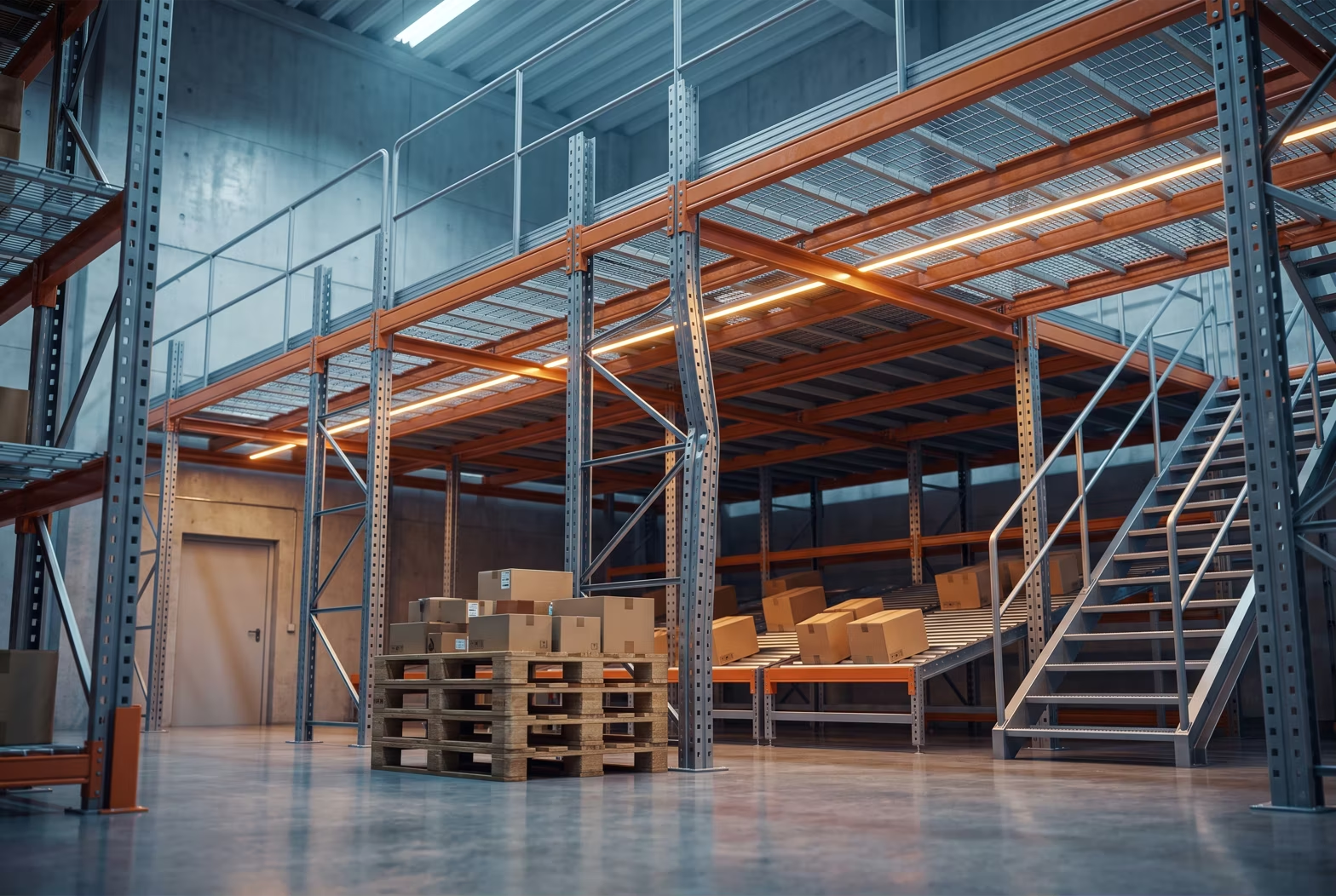
Warehouse rack repair on a single-level selective rack is a contained job. A pick module, combining selective pallet rack, pallet flow, push back, and carton flow systems into one multi-level structure, changes that math considerably for a warehouse, since damage low in the structure carries consequences for everything stacked above it.
A warehouse that has invested in a pick module has also taken on more repair complexity than a warehouse running simple selective racking, and that warehouse deserves a repair partner who treats the added complexity as routine rather than unfamiliar. The warehouse itself usually cannot tell which system a given column actually belongs to without help.
Why Load Paths Get More Complicated
A pick module’s lower levels in a warehouse often support walkways, personnel, and upper-level storage systems in addition to the pallet loads a standard rack carries. A rack column supporting a walkway deck has a different, often more conservative, safety margin than one supporting only palletized storage. Damage assessment for a warehouse has to account for whichever combination of loads that specific column actually carries.
This is not a distinction that can be made from a generic reference. It comes from the module’s actual as-built design, since the same column position can carry different responsibilities from one facility’s layout to the next.
Original design drawings, where a warehouse still happens to have them on file, settle this specific question directly rather than leaving it to inference from the current layout alone at that site. Where those drawings are missing or the module has been modified since it was installed, the as-built condition on site becomes the only reliable source, which means a more careful survey before any repair recommendation gets made.
Why Access Is Its Own Challenge
Reaching a damaged column inside a multi-level warehouse structure often means working around decking, safety railings, and the flow systems built into the levels above and below it. A rack repair that would take an hour on an open selective rack can take considerably longer once the physical access itself becomes part of the job.
Coordinating around a warehouse’s own personnel is part of this too. A pick module in active use has staff working the upper levels during normal operating hours, which means a rack repair often has to be scheduled around foot traffic on the same structure, not just around the mechanical systems it carries.
Sequencing the work in a warehouse adds another layer. A rack repair that requires temporarily removing a section of decking or a walkway railing has to plan for putting that safety infrastructure back correctly before the module goes back into use, not just completing the structural fix underneath it.
Why the Mixed System Types Compound the Complexity
A single pick module column in a warehouse might support a selective rack section on one level and a carton flow lane on another. That means any given repair has to satisfy the specifications of more than one distinct system type on that same single structural piece. Confirming which combination of systems a specific column actually supports is part of the assessment before any repair method gets chosen.
Fasteners and connectors can differ between the levels of a warehouse pick module too, since carton flow and pallet flow hardware is not always sized or rated the same as the selective rack connectors elsewhere on the same column. A rack repair that reuses one level’s specification across the whole column risks a mismatch on whichever level was not actually checked.
Why This Work Calls for Specific Experience
A rack repair crew unfamiliar with pick module structures in a warehouse can miss how a single column’s role changes across its height. It gets treated as a standard upright in a warehouse when it is actually carrying walkway loads, flow-lane loads, and pallet storage loads at different points along the same piece of steel. 1 Stop approaches pick module repair for a warehouse with that layered load path in mind from the start, built on decades of servicing the full range of system types a pick module can combine.
Why a Layered Structure Needs a Correspondingly Unbiased Review
A pick module’s layered load paths in a warehouse mean a rack repair decision on one column can involve more than one system type, and more than one manufacturer’s specifications. 1 Stop’s decades of experience support an agnostic review across whichever combination of systems a specific column actually supports. A provider tied to one manufacturer’s kit line has no real answer for a warehouse rack column that also carries someone else’s flow lane or carton system above it. Depending on that combination, a different manufacturer’s kit, or full replacement, can be the right call for that specific piece. Making that decision well takes a partner reviewing the whole structure, not one product.
Restoring the Whole Structure, Not Just One Piece
A warehouse considering this kind of structure for the first time is better served factoring in the added maintenance complexity at the design stage, rather than discovering it only once a repair is already needed. Asking a pick module vendor for as-built drawings and keeping them on file from day one is the single cheapest thing an operator can do to make every future repair faster and more accurate.
1 Stop’s warehouse rack repair on a pick module accounts for everything that specific column, beam, or connection actually supports at every level it touches, not just the visible damage on the level where it happened to be found.