








Warehouse Rack Repair: Why Dynamic Systems Add Repair Complexity
Push back and pallet flow racking carry moving components a standard selective system never has, and warehouse rack repair on either has to account for mechanical function, not just structural condition.
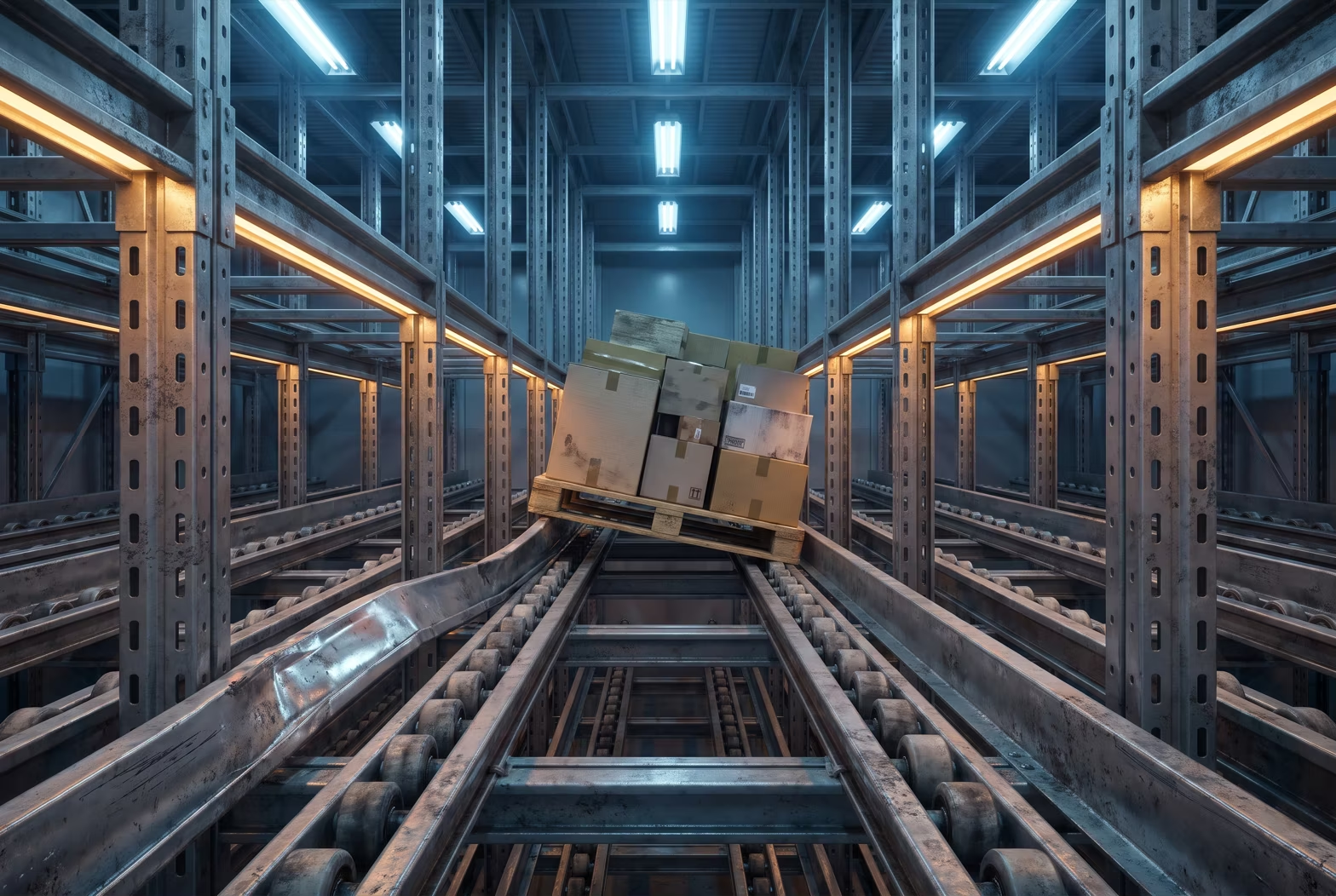
Warehouse rack repair on a static selective rack asks one question: is the rack frame sound. Push back and pallet flow racking in a warehouse ask a second question on top of that, since both rely on carts, rollers, or rails that have to keep working correctly for the system to function at all.
What Makes Push Back Racking Different
Push back racking in a warehouse uses gravity-fed telescoping carts riding on rails set into the rack frame, allowing pallets to nest several deep in a single lane. Damage to the rail itself, not just the surrounding frame, can throw a cart off its track or bind it partway down a warehouse lane. An assessment on push back racking checks the rails and carts alongside the structural frame for a warehouse, since a structurally sound frame with a damaged rail is still not a working system.
A cart stuck mid-lane in a warehouse is often the first sign something is wrong, well before anyone notices a structural issue with the frame itself. Working backward from that symptom to the actual cause, whether it is a bent rail, a damaged cart wheel, or frame movement throwing off the rail’s alignment, is part of the same assessment.
The total number of carts affected in a warehouse also tells its own separate story worth noting. A single stuck cart usually points to something local, such as a damaged wheel on that one cart or a short section of rail. Several carts binding across the same lane points further up the chain, often toward the rack frame having shifted enough to throw off the rail over a longer stretch of the warehouse than any single cart would suggest on its own.
What Makes Pallet Flow Racking Different
Pallet flow racking in a warehouse moves pallets by gravity down an inclined roller or wheel bed, from the loading face to the picking face. The incline itself depends on the rack frame holding a precise, consistent angle. Frame damage that would be cosmetic on a level selective rack can disrupt that angle enough to slow, jam, or misalign product moving through a warehouse’s lane.
A lane running even slightly out of its designed angle in a warehouse can still move pallets, just unevenly. That makes the problem easy for a warehouse to miss until pallets start arriving at the picking face faster or slower than the lane was designed to deliver them.
Why the Assessment Widens on Dynamic Systems
A rack repair on either system has to confirm two things separately: that the structural frame is sound, and that the mechanical components it supports still function correctly. Fixing the rack frame while leaving a damaged rail or a compromised roller bed unaddressed leaves a warehouse with a rack that looks repaired but does not actually work as designed.
Testing under load, not just a visual check once the rack repair is installed, is part of confirming that second piece for a warehouse. A cart or a wheel bed can look properly seated and still bind or run unevenly once a full pallet load is actually put through the lane, which is why a functional test belongs in the sign-off, not just a structural one.
Why Repair Kits Need to Account for the Mechanism
A generic bolt-on repair engineered for a static selective frame in a warehouse does not automatically account for a push back rail’s precise alignment requirements or a pallet flow lane’s exact incline tolerance. 1 Stop’s assessment on these systems checks both the structural repair and the mechanical function it has to support. That standard reflects decades of servicing dynamic storage systems in every kind of warehouse, where a structurally correct repair can still leave a functionally broken lane if the mechanism itself is never verified.
Why Dynamic Systems Need an Especially Unbiased Comparison
A dynamic system’s mechanical components narrow the field of repair options considerably, which makes an unbiased comparison across what remains especially important. 1 Stop’s over 30 years of experience support an agnostic view into both the structural repair and the mechanical function it has to support. A provider selling a single kit line may not carry anything engineered for the specific rail, cart, or roller bed a warehouse actually has installed. Depending on the damage, a different manufacturer’s kit, or full replacement of the mechanical component, can be the answer that actually gets the lane moving again. Reaching it takes a partner weighing every option available for that specific mechanism.
Confirming the Whole System Works, Not Just the Frame
A high-throughput warehouse leaning on these systems for density has the most to lose if the mechanism fails, which makes the combined structural-and-mechanical check especially valuable for that operation.
A warehouse relying on dynamic storage systems takes on mechanical risk a simpler layout never faces, and one that only checks the frame is missing exactly the part most likely to fail next. The functional test costs a few extra minutes per lane; skipping it is how a warehouse ends up with a rack that passed a structural sign-off and still jams on the first full pallet run.
1 Stop does not call a warehouse rack repair on push back or pallet flow racking truly finished until the lane actually moves pallets the way it was originally designed to, not just until the structural frame happens to look sound.