








Warehouse Rack Repair: How Structural and Roll-Formed Systems Differ
The steel a rack is built from changes how it fails and how it gets fixed, so warehouse rack repair on a structural frame and on a roll-formed frame follows two different playbooks.
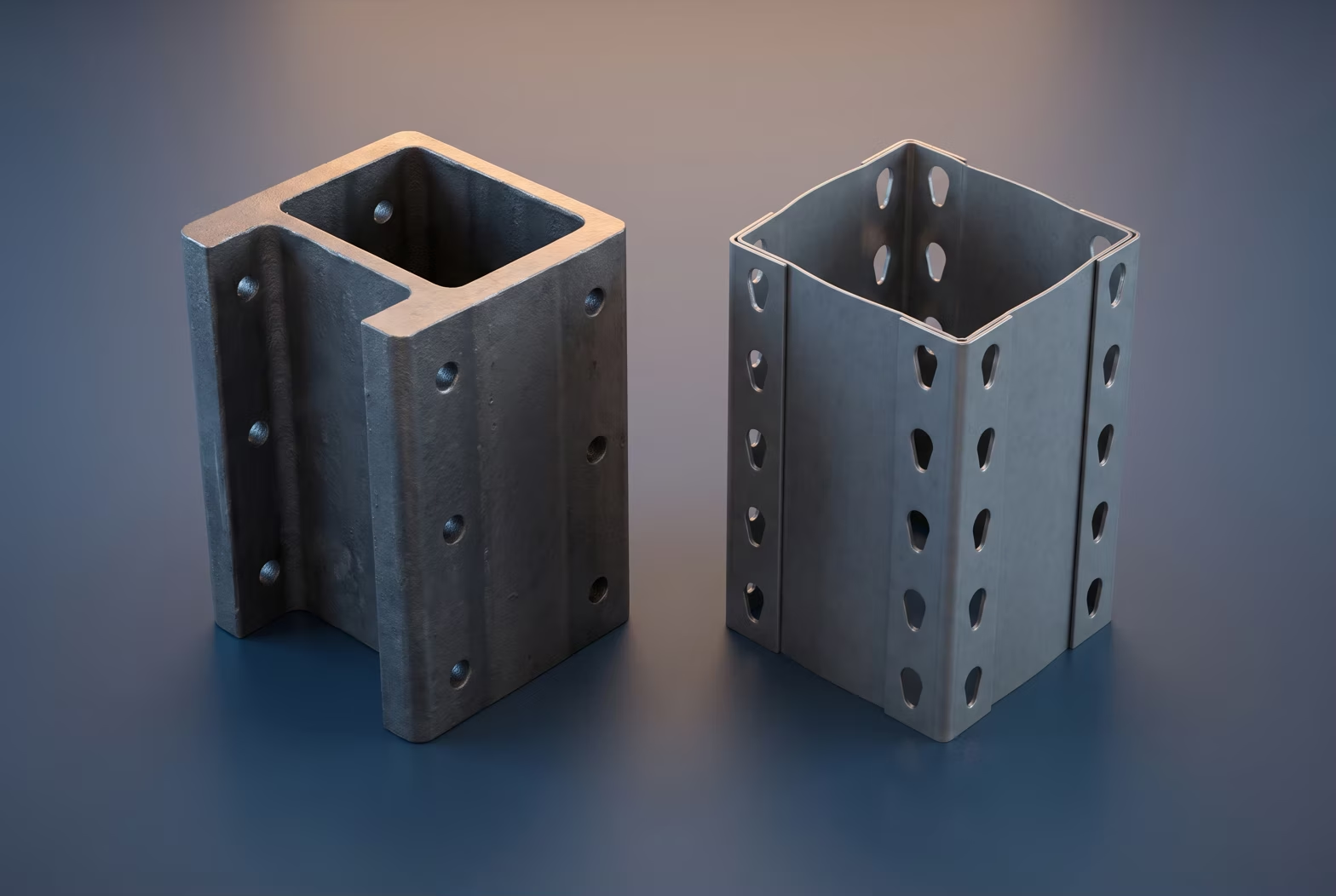
Warehouse rack repair depends heavily on which of the two dominant construction types is actually damaged. Structural and roll-formed racking fail differently in a warehouse under the same kind of impact, and a fix engineered for one does not simply transfer to the other.
A warehouse running structural racking in its freezer and roll-formed racking on its retail-adjacent storage is not unusual, and that operation needs both material types assessed on their own terms. A warehouse itself rarely knows offhand which section is which, which is exactly why confirming it comes before recommending anything.
How the Two Materials Actually Differ
Structural racking is built from hot rolled channel steel, relying on material mass and thickness for its strength. Roll-formed racking starts as flat coil steel run through a forming machine, relying on the shape of the profile rather than raw material mass. That difference in how each gets its strength is also the difference in how each responds to a hit.
Why Roll-Formed Damage Reads Differently
A roll-formed rack column loses a larger share of its rated strength per inch of deformation than a structural column of similar size, because bending the profile itself compromises the shape the strength depends on. Damage on a roll-formed rack that looks moderate can already represent a larger percentage loss of capacity than the same size dent on a structural frame.
This is part of why roll-formed racking, common in lighter commercial and retail warehouses, tends to get flagged for repair sooner in its service life than structural racking carrying similar loads. The margin between visible damage and a real capacity problem is simply narrower.
A warehouse running both types side by side, common once an operation has expanded over several phases, benefits from knowing which sections are which before a routine walkthrough even starts. Applying a structural-steel level of tolerance to a roll-formed rack section, simply because they sit in the same aisle, can leave real damage unflagged for longer than it should be.
Why Structural Damage Often Looks Worse Than It Is
Structural steel’s greater mass means a warehouse rack can absorb a harder impact before showing damage, and a dent that does appear often represents a smaller percentage loss of the column’s total rated strength. This does not mean structural rack damage should be assumed minor. It means the visual read is less reliable in the other direction than it is on roll-formed steel.
A structural column in a warehouse that has taken a serious hit can still look only lightly marked to someone walking past it, precisely because the material’s own durability is masking the extent of what happened underneath the surface. That is exactly the kind of finding a measured warehouse assessment is built to catch and a casual glance is not.
What Changes in the Actual Repair
A structural repair for a warehouse typically involves bolted connections to channel steel, matching the original 3-inch or 4-inch channel width and gauge. A roll-formed repair works with thinner gauge steel and the manufacturer’s specific punch pattern, where a slight mismatch in hole spacing prevents a proper seat entirely for that warehouse. Neither repair type substitutes for the other in a warehouse, even when both are technically bolt-on kits.
Hybrid systems, which combine roll-formed step beams with structural frame components, add a further wrinkle for a warehouse. A rack repair on this kind of system has to correctly identify which specific part of the assembly is damaged, since the rack frame and the beam on the same rack can follow entirely different repair specifications.
Fastener choice differs between the two for a warehouse as well. Structural warehouse repairs often use larger-diameter bolts sized to the thicker channel steel, while roll-formed repairs work with the smaller fastener sizes the thinner gauge calls for. Substituting one for the other in a warehouse, even when both technically fit through the hole, can leave a connection weaker than either specification intends.
Why Material Type Alone Shouldn’t Decide the Provider
Structural and roll-formed racking call for different repairs in a warehouse, and the manufacturer chosen for each should be decided by the confirmed specifications, not by which product a given provider happens to carry. 1 Stop’s decades of experience support an agnostic comparison across both material types and the manufacturers behind them. A provider selling a single kit line may only properly serve one of the two material types a warehouse actually has installed. Depending on the confirmed construction and the damage, a different manufacturer’s kit, or full replacement, can be the right call either way. Making that decision well takes a partner without a favorite material to push.
Why Confirming Construction Type Comes Before Everything Else
Assuming a rack is one type when it is actually the other leads a warehouse to order the wrong kit entirely, not just a slightly imperfect one. 1 Stop confirms construction type as part of the same identification step that confirms manufacturer and model, drawing on decades of working across both material types on warehouses that often run one of each.
A warehouse expanding in phases over the years is the most likely to end up with this exact mix, since each expansion phase for that warehouse may have used whatever construction type made sense at the time.
The practical fix is a marked zone map, the same tool used to track mixed rack brands, extended to flag construction type alongside manufacturer. A crew arriving with that map already knows to reach for the right fastener size and hole pattern before the first bolt comes out, instead of discovering the mismatch mid-repair.
1 Stop matches warehouse rack repair to the actual construction type, structural or roll-formed, restoring the rack column the way it was actually engineered rather than applying a generic fix to two materials that behave in very different ways.