








Warehouse Rack Repair: What Changes in a Freezer or Cooler Environment
Cold storage conditions change how steel behaves and how a rack repair crew can work, so warehouse rack repair in a freezer or cooler needs a different approach than the same job in an ambient warehouse.
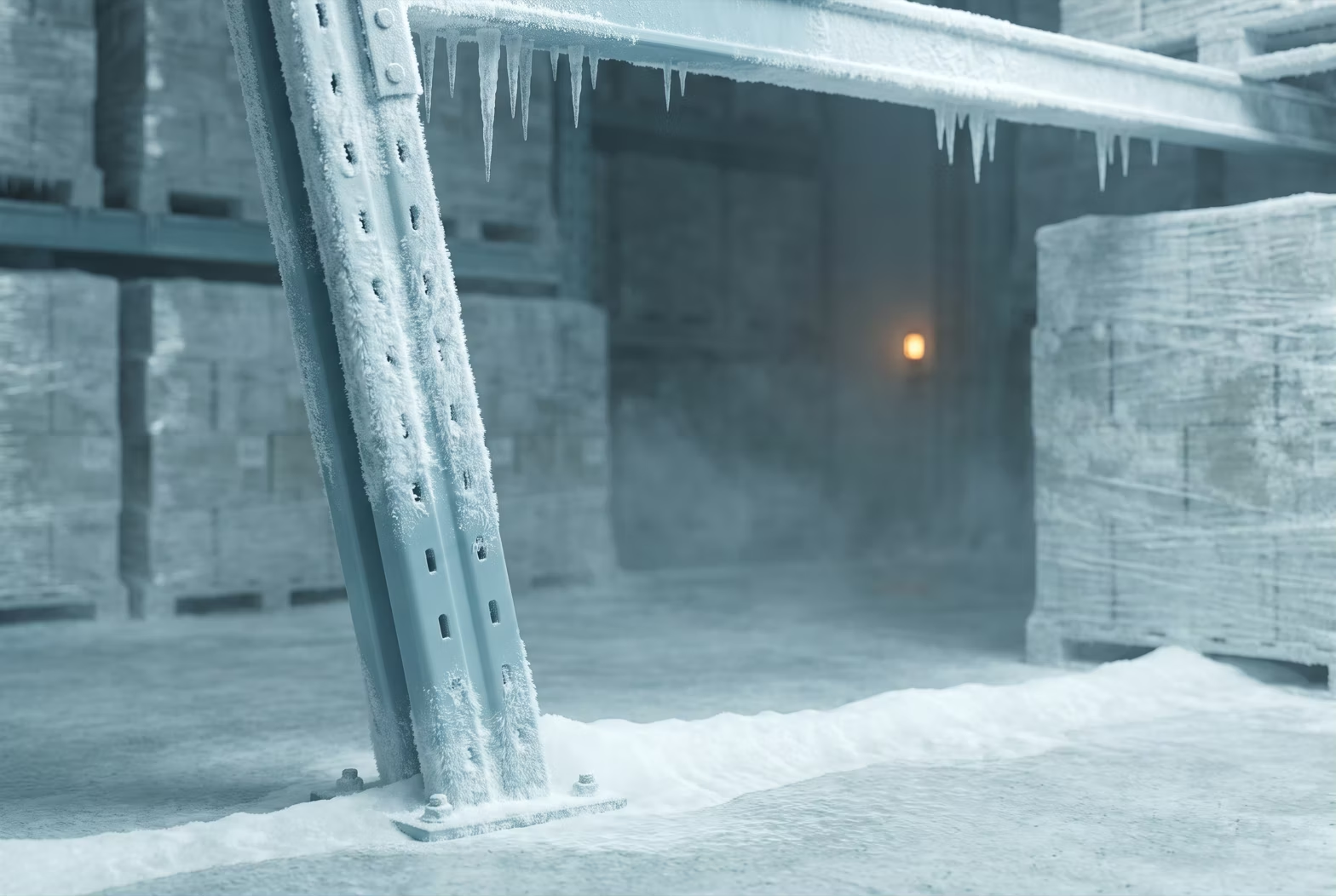
Warehouse rack repair inside a freezer or cooler environment deals with conditions an ambient warehouse never has to account for, from the steel itself to the crew doing the work. Structural rack systems are commonly specified for exactly these environments because they hold up better under the added stress, and warehouse repair work has to account for the same stress.
A cold-storage warehouse cannot treat its rack maintenance the way an ambient warehouse would, and a warehouse running both environments under one roof needs two separate standards applied correctly. A warehouse’s own maintenance team often already senses this intuitively, but confirming it with a proper rack assessment is what turns instinct into an actual repair specification.
How Cold Affects the Steel Itself
Rack steel becomes more brittle at low temperatures, which changes how it responds to impact compared to the same frame at room temperature. A strike that would dent a rack column in an ambient warehouse can crack or fracture the same steel in a deep-freeze environment, particularly on repeated impact over time.
Condensation and freeze-thaw cycling at loading doors and transition zones add another factor for a warehouse, since repeated moisture exposure followed by freezing accelerates corrosion at exactly the connection points a rack repair depends on being sound.
Anchor bolts at floor level in a warehouse see this most directly. A base plate near a dock door, exposed to repeated warm-to-cold transitions as trucks load and unload, can corrode faster than the same connection deeper inside a stable freezer zone, even on racking that is otherwise identical.
Checking that specific rack zone on a regular basis is worth calling out separately from a general warehouse inspection, since it fails on a different timeline than the rest of the warehouse. A base plate ten feet from a dock door, inside a warehouse running that kind of traffic, can need attention years before an identical plate further inside the same freezer ever does.
Ice buildup adds a load factor to a rack that an ambient warehouse never has to plan for. Condensation that freezes on a beam or a wire deck adds real weight over a cold storage cycle, and a rack column already carrying stored product close to its rated capacity has less margin to absorb that extra load on top of it.
Why Access and Timing Change the Job
Working inside an active warehouse freezer means limited time on site before crew safety becomes the priority, which affects how a rack repair gets scheduled and staged. Materials and fasteners on a rack also behave differently in extreme cold. Adhesives or coatings rated for ambient use may not cure or bond properly at freezer temperatures, so specifications that work fine in a standard warehouse cannot simply be assumed to transfer.
Staging warehouse work in shifts, rather than one continuous visit, is common in the coldest environments. A crew working in and out of a deep freeze in timed intervals gets more done safely than one trying to push through a single extended stay.
Lighting inside a working freezer is often dimmer than a standard warehouse rack aisle, both to save energy and because fewer people spend extended time in the space day to day. A rack repair crew factoring that into their own equipment and staging avoids losing time to conditions that have nothing to do with the actual repair.
Why Structural Racking Dominates This Environment
Structural pallet racking is built from hot rolled channel steel and specified for freezer and cooler applications because it withstands forklift impact better than roll-formed alternatives. That durability matters more in cold storage, given how often forklifts operate in tight, visibility-limited cold aisles. A rack repair on structural racking in this environment still has to match that same durability standard, not a lighter one.
Why Cold Storage Repairs Especially Need an Unbiased Comparison
A freezer environment narrows which repair methods and materials actually hold up, which makes an unbiased comparison more important here than almost anywhere else. 1 Stop’s over 30 years of experience support an agnostic view across manufacturers and methods suited to cold storage specifically. A provider selling one product line may not carry anything rated for the environment in question at all. Depending on the damage and the environment, a different manufacturer’s kit, or full replacement, is often the safer answer in a freezer or cooler. Reaching that answer takes a partner without a single product to fall back on.
Getting the Repair Right for the Environment It Sits In
A rack repair kit engineered for ambient conditions is not automatically the right choice for a freezer application. 1 Stop accounts for the specific environment during the assessment, drawing on decades of servicing cold storage warehouses where the standard ambient-warehouse assumptions do not fully apply.
That means confirming fastener and material ratings for the actual operating temperature, not just the rack’s manufacturer and model, before a rack repair gets scheduled. A specification that works in a cooler running at a few degrees above freezing is not automatically suited to a deep-freeze operation running dozens of degrees colder.
A warehouse running a mixed facility, part ambient and part refrigerated, needs both halves treated as separate environments with separate maintenance schedules, not one blended warehouse-wide standard.
The practical marker for that split is the dock door itself. Racking within a few bays of a freezer-to-ambient transition sees the condensation and temperature-cycling stress described earlier; racking deep inside a stable zone in either environment does not, and a maintenance schedule built around one blended standard misses that distinction outright.
1 Stop’s warehouse rack repair in a cold storage environment accounts for how the cold itself changes the steel, the fasteners, and the working conditions, not just the visible damage that prompted the call.