








Warehouse Rack Repair: Repairing a Bay Without Emptying It First
A rack repair that requires unloading an entire bay costs a warehouse far more than the rack repair itself, so a job that can happen in place is worth understanding before assuming a full clearance is necessary.
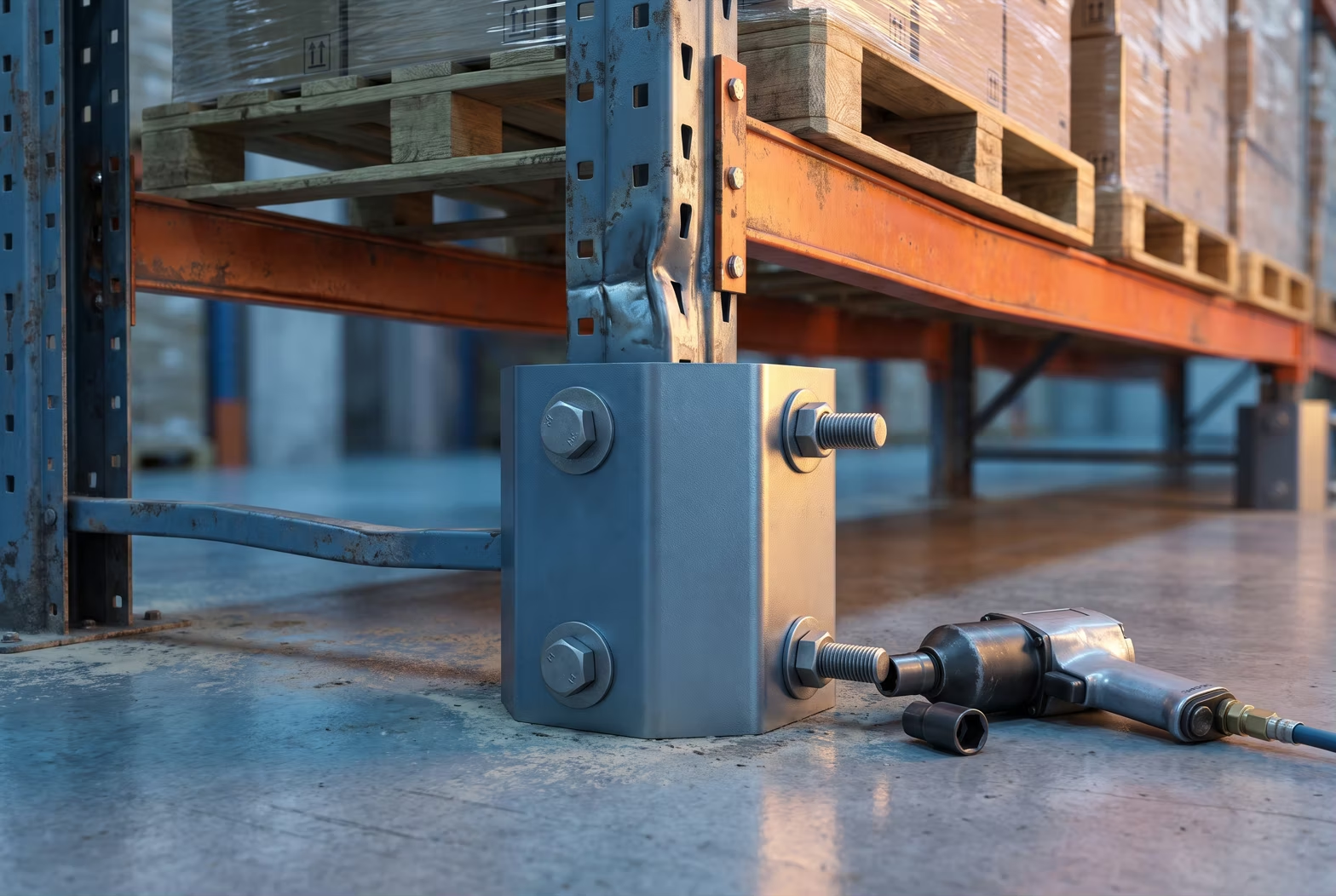
Warehouse rack repair on a loaded bay is possible more often than most warehouse operators assume, provided the damage and the chosen repair method actually support working around the stored product rather than through it. Knowing when that applies changes how the job gets planned from the first phone call.
A warehouse trying to avoid a full shutdown benefits most from understanding this distinction. A high-turnover warehouse, moving product through a rack bay constantly, has different tolerance for downtime than one storing slower-moving inventory, and that difference shapes how aggressively a warehouse should push for a no-clearance rack repair versus accepting a partial one.
Why Emptying a Bay Is So Disruptive
Clearing a warehouse bay means relocating every pallet on it, usually to another already-tight section of the building, and putting it all back once the repair is finished. That is labor and equipment time on both ends of the job, on top of whatever the work itself takes. The rack bay often sits unavailable for storage far longer than the actual repair work requires.
Finding somewhere to put the relocated product is its own problem for a warehouse already running near capacity. A rack bay clearance during a busy stretch can mean temporarily stacking product in an aisle or a receiving area never meant to hold it, which creates its own handling risk on top of the original repair.
When a Repair Can Happen With the Bay Still Loaded
A bolt-on kit installed on a warehouse rack column with damage confined below the lowest loaded beam level often does not require moving product at all. The rack repair happens at floor level while the stored pallets above remain undisturbed. Even rack repairs slightly higher on the frame can sometimes proceed with only the immediately adjacent pallet positions cleared, rather than the whole bay.
Timing the visit around a bay’s natural rotation can reduce clearance needs even further for a warehouse. A bay that is due to ship out its current pallets on its normal schedule anyway offers a window where the work lines up with product movement the warehouse was already planning, rather than triggering an unplanned relocation.
Bracing repairs in a warehouse frequently fall into this category as well. A diagonal strut running along the aisle side of a rack frame is often accessible without disturbing anything stored on the pallet side, since the two sit on different faces of the same structure.
When Emptying the Bay Actually Is Necessary
Damage that reaches a beam connection point directly supporting a warehouse’s stored product usually requires clearing that specific level, since the rack repair has to physically access the connection the load is resting on. Full rack section replacement, as opposed to a column-only repair, typically requires clearing the bay entirely, since beams have to come off before the rack column itself can be removed and replaced.
Damage spanning multiple levels of the same warehouse bay usually pushes toward full clearance too, even when each individual level’s damage might otherwise have allowed a partial approach. Repairing one rack level while leaving pallets loaded on the level directly above it is rarely a safe combination once that upper level’s own support has also been compromised.
There is little point forcing a method to avoid clearance when the damage actually calls for it. Attempting to work a rack column around product that is truly in the way slows the job down and increases the chance of a mistake, without avoiding the disruption it was meant to save.
Planning a Repair Around What Actually Needs to Move
The right question for a warehouse is not whether the bay needs to be cleared, but which specific levels or positions the work actually requires access to. 1 Stop identifies that rack-level scope during the assessment, so a warehouse only clears what actually blocks the work rather than emptying an entire bay as a default precaution.
That distinction reflects decades of working rack repairs into active warehouses without unnecessary disruption. It is often the difference between a repair that barely interrupts operations and one that takes a whole rack bay out of service for days longer than the actual work demanded.
Why Minimizing Disruption Still Calls for an Unbiased Choice
Keeping a warehouse bay in service during repair depends partly on choosing a method that actually allows it, and that choice should not be limited to whatever one provider happens to sell. 1 Stop’s decades of experience support an agnostic comparison across repair methods, weighing which one minimizes disruption for the specific damage at hand. A provider selling a single kit line may not offer the lowest-disruption option at all. Depending on the damage, a different manufacturer’s kit, or a different repair method entirely, can keep a bay running when the default option would not. Finding that path takes a partner considering every option, not one.
Keeping the Warehouse Running During the Fix
A warehouse operating close to its storage limits has the most to lose from an overly cautious clearance, which makes minimizing disruption a bigger priority for that warehouse than for a warehouse with slack capacity.
The gap shows up most clearly at the receiving-dock level. A facility running near its ceiling has nowhere to stage relocated pallets except an aisle or a dock apron already earmarked for the next inbound truck, which turns an unnecessary clearance into a schedule conflict on top of the repair itself. A facility with slack capacity absorbs the same clearance without much friction at all.
1 Stop plans every warehouse rack repair around minimum necessary disruption, clearing only what the specific repair actually requires rather than a whole bay out of habit, which keeps a warehouse closer to full operation throughout the entire job.