








Warehouse Rack Repair: What Actually Happens to a Column on Contact
A forklift strike sends stress through the entire column, not just the point of impact, and that stress pattern is what decides whether a repair holds or a replacement becomes the safer call.
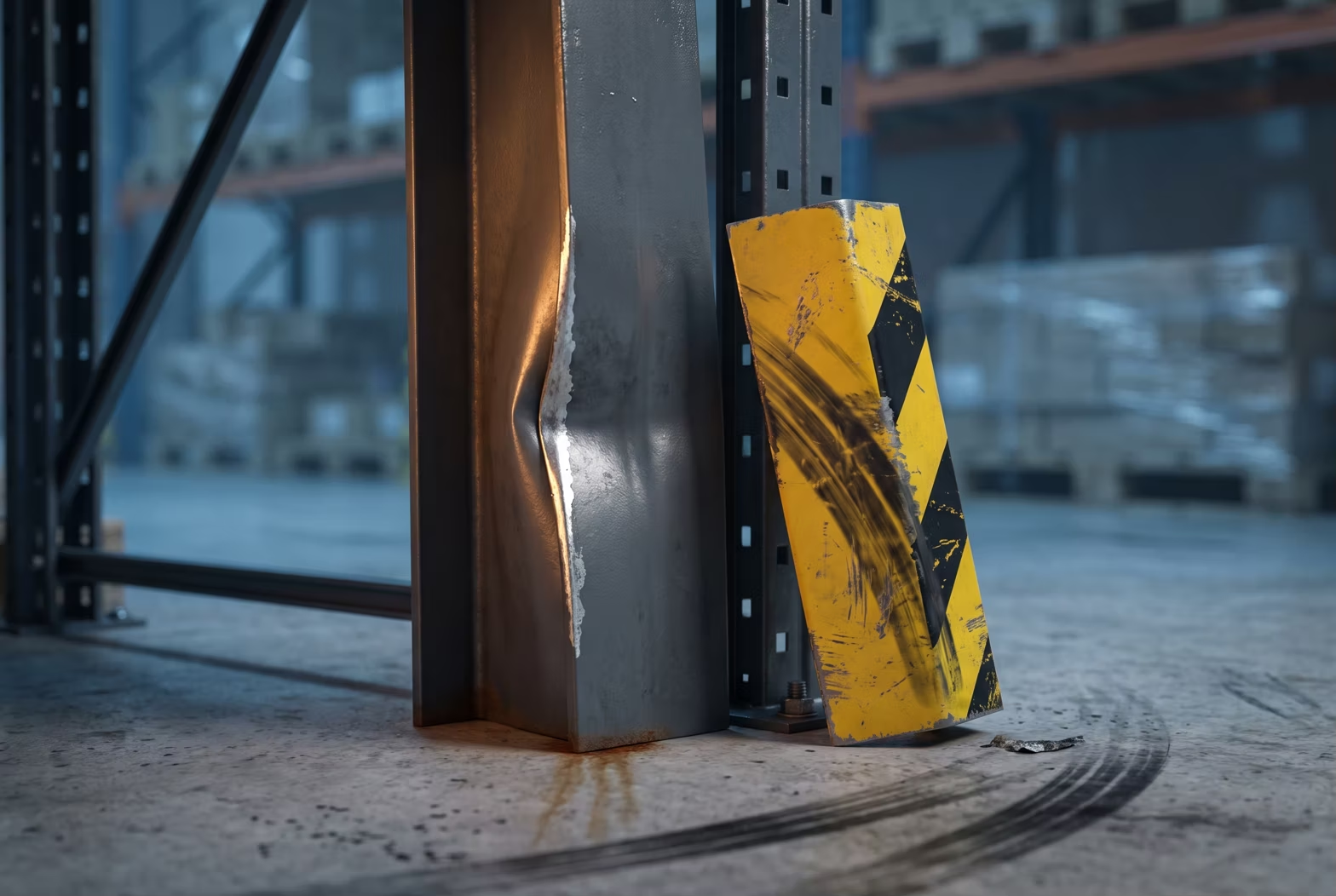
Warehouse rack repair usually starts with a forklift tap that looks like a minor accident, but the force travels well past the dent a driver notices. A rack column carries load along its full length, so a strike anywhere on it changes how the whole piece behaves. That is why 1 Stop assesses every strike against the rack column’s full load path before ruling on whether a rack repair kit restores it or the section needs replacing.
Every warehouse running regular forklift traffic deals with this eventually. A newer warehouse with wide, well-lit aisles sees fewer strikes than an older warehouse with tighter clearances, but no warehouse is fully immune to it. What separates a well-run warehouse from one due for a much bigger bill later is whether that warehouse acts on the first strike or lets it sit until a second one compounds the problem.
How a Column Absorbs a Forklift Strike
A pallet rack upright carries weight down its length in compression, braced by the horizontal and diagonal struts that keep it from bowing sideways. A lateral hit near the base pushes the rack column off that straight line, denting the flanges and sometimes twisting the section along its axis. Because forklifts operate at floor level in a normal warehouse, the bottom two feet of most columns take the brunt of this kind of contact, and that is also the section carrying the most compressive load in the rack frame.
The result is a column that can look only lightly marked to a warehouse crew while its ability to carry that load has already dropped. A bowed column redistributes force differently than a straight one. Once it passes a certain point of curvature, it buckles under weight it previously handled without issue.
Most strikes happen the same way: a driver backing out of a warehouse bay or turning tight between aisles clips the nearest upright with the rear of the truck or a raised fork. The mast and counterweight carry enough mass that even a low-speed contact delivers far more force than the size of the resulting dent suggests. That is part of why forklift contact accounts for the overwhelming majority of warehouse rack damage seen in the field. A hand cart or a dropped pallet inside a warehouse simply cannot deform structural steel the way a moving forklift can.
After decades of inspecting struck columns across warehouses of many sizes, 1 Stop’s crews read a dent’s shape and location as a load-capacity question first, not a cosmetic one.
Why the Damage Often Looks Smaller Than It Is
Every rack manufacturer sets its own allowable tolerance for how far a rack column can bow before it falls outside its rated capacity, and that tolerance is tighter than most warehouse staff assume. A dent that looks minor to the eye can already exceed it. This shows up most on the roll-formed steel common in warehouse racking, which relies on the shape of the section rather than material mass for its strength, so it loses more of that strength per inch of deformation than a heavier structural column does.
This is also where damage gets missed on a busy warehouse floor. A visual walkthrough catches the obvious hits, but a rack column can bend just enough to clear the tolerance line without leaving an obvious dent. Left that way inside a working warehouse, it can sit in service for months, carrying less capacity than the load plaque above it claims.
Because that tolerance varies by manufacturer and rack type, 1 Stop identifies the exact rack before ruling on repair versus replacement, rather than applying one generic damage threshold across different brands.
What Decides Repair Versus Replacement After a Strike
Three things drive the call in any warehouse: where on the rack column the strike landed, whether the flange alone deformed or the full section twisted, and whether the impact also damaged the bracing connected to it. A strike confined to the lower flange of a single column, with the bracing intact, is a different warehouse repair than one that has knocked a diagonal strut loose or torqued the rack column enough to throw off the rack frame’s alignment.
Bracing damage changes the picture in a warehouse more than most staff expect. A single bent column in an otherwise sound warehouse rack can often be addressed on its own. A knocked-loose diagonal strut is different, because the rack frame around it has lost part of what keeps it from swaying, so the assessment has to widen to the bays on either side, not just the column that was hit.
Where the damage is limited to a single column and the surrounding bracing is sound, the picture is simpler for a warehouse to manage. 1 Stop’s repair kits are designed to restore the original load path in that situation without pulling down the whole frame or emptying the warehouse bay around it.
Why the Fix Shouldn’t Come From Whoever Sells the Kit
A rack column struck by a forklift inside a busy warehouse eventually needs someone to recommend a fix, and who makes that call matters as much as the diagnosis. 1 Stop brings over 30 years of rack repair experience to that call, with an agnostic view that covers more than reading the damage. It extends to the rack repair process itself and the specific kit or method the damage actually calls for. A provider selling only one manufacturer’s kit has an obvious reason to recommend that kit regardless of fit, which is not the same as an unbiased read of the rack column in front of them.
Depending on where the strike landed and how far it extends, a different manufacturer’s kit, or in some cases full replacement, can be the safer answer for a warehouse trying to get the column back to its rated capacity. Reaching that answer takes an agnostic partner, not a seller with one product to place.
Getting the Diagnosis Right Before the Fix
Two warehouses can absorb the same forklift strike and end up in very different positions six months later, and the difference usually comes down to how fast the hit got reported, not how hard it landed. A warehouse where drivers flag a strike the same shift it happens gives 1 Stop a rack column to assess while the damage is still fresh and isolated to one section. A warehouse that only catches the same strike during an annual walkthrough is often looking at a column that has carried reduced capacity for months, with the bracing and connections around it absorbing extra stress the whole time.
That gap is why 1 Stop treats every reported strike as worth a real rack assessment rather than a note to revisit later. A column checked the week of the hit almost always needs a smaller warehouse rack repair than the same column caught by chance during a routine warehouse inspection months on, once the damage has had time to compound.
Warehouse rack repair only works when the fix matches what actually happened inside the steel, not just what shows on the outside. Reading that gap, and deciding whether a rack repair kit or a new section is the right call, is the diagnostic work 1 Stop’s decades of hands-on inspection experience are built for.