








Warehouse Rack Repair: Why Manufacturer ID Comes Before Any Repair
Two racks can look nearly identical on the floor and still take completely different repair parts, which is why identifying the exact manufacturer and model comes before any fix is proposed.
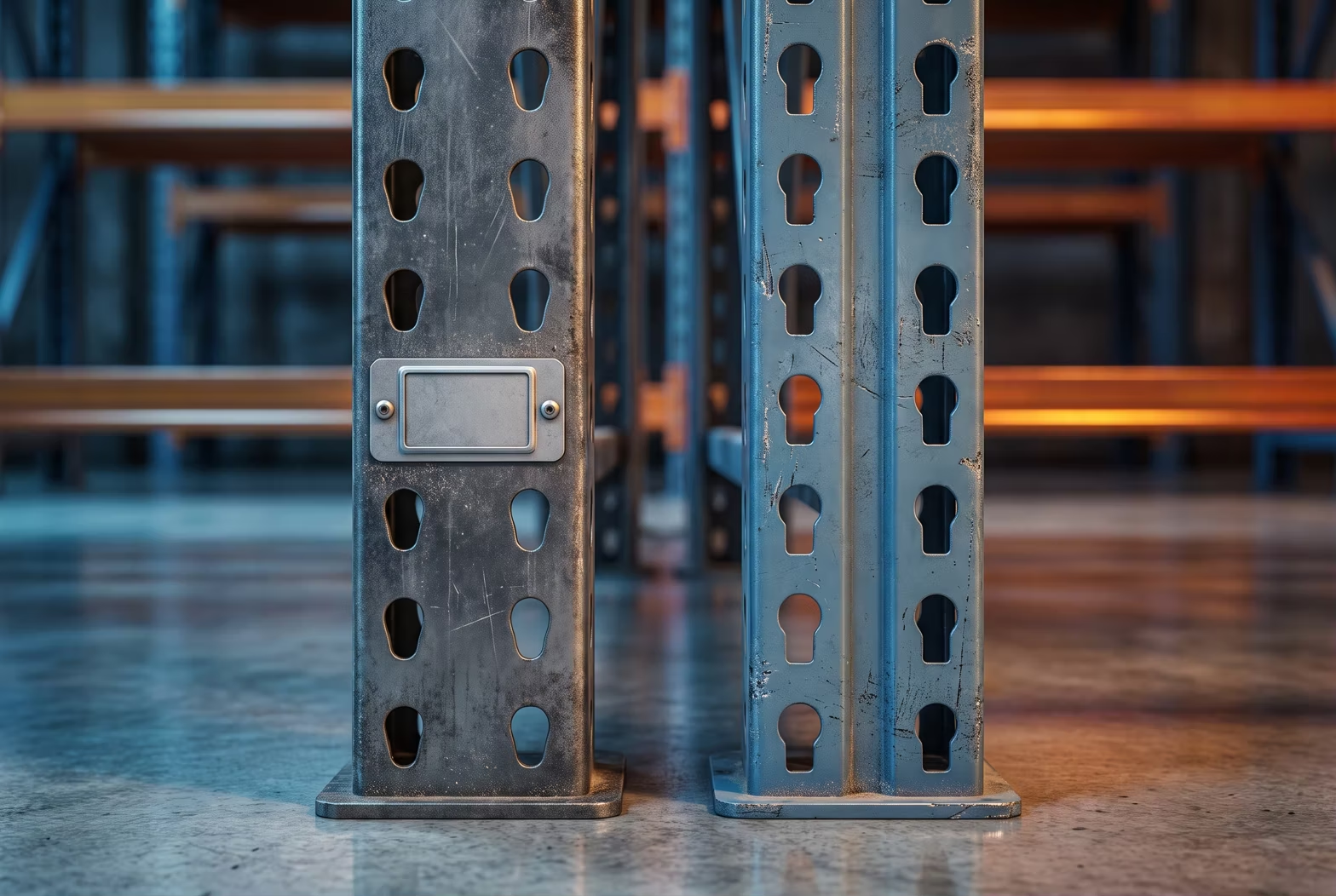
Warehouse rack repair goes wrong more often from a mismatched part than from a wrong diagnosis, so 1 Stop identifies the rack’s manufacturer and model before recommending a fix rather than assuming one damaged upright looks like the next. A warehouse that has expanded over several years, bought a warehouse with racking already installed, or mixed used and new sections can end up running two or three different rack brands without anyone tracking which is which.
Any warehouse that has grown over time is a candidate for this problem, whether that growth came from a single expansion or several combined over the years. A warehouse that started small and added capacity in phases rarely ends up running one uniform system, and a warehouse that inherited racking from a previous tenant almost never does either.
Why Brand and Model Actually Change the Repair
Teardrop punch spacing, beam pin patterns, column gauge, and capacity ratings all vary by manufacturer across warehouse racking, and several of those differences are not visible without close inspection. A replacement beam or a bolt-on repair piece built for one manufacturer’s hole spacing will not seat correctly on another’s frame, even when the two racks look like the same product from a few feet away.
This matters most on older or discontinued lines. A rack installed in a warehouse a decade or more ago may come from a manufacturer that no longer produces that exact profile, which means a repair built around guesswork instead of confirmed specifications risks a part that never fits properly.
Load capacity is the other place identification changes the outcome. Two uprights of similar height and gauge can carry very different rated loads, depending on how the manufacturer engineered the rack frame. A repair sized to a generic column instead of the confirmed model can leave a warehouse’s racking rated below what its load plaque claims, even after the visible damage is gone.
Because these differences sit below what a walkthrough can catch, 1 Stop treats rack identification as its own step, backed by decades of exposure to the range of manufacturers a warehouse is likely to be running.
The Risk of Skipping Straight to a Fix
A repair provider working a warehouse call who sells only one manufacturer’s kit has an incentive to make every job fit that one product, whether or not it is the right match for the rack in front of them. That is not usually a matter of bad intent. It is simply what happens when the fix on offer is fixed before the diagnosis begins.
An agnostic approach removes that constraint. Once the rack’s manufacturer and model are confirmed for a given warehouse, the repair option gets chosen to match the damage and the rack frame, not the other way around.
1 Stop’s own Pallet Rack Identification Table exists for exactly this reason. It matches upright and beam color combinations against known manufacturer brands, so a warehouse operator can find out what they actually have installed before a repair conversation even starts.
Identification in a Mixed-Brand Warehouse
A warehouse that has grown through expansion, relocation, or acquisition frequently ends up with more than one rack brand in the same building, sometimes in the same aisle. Treating that mix as one uniform system is where mismatched repairs tend to start.
Identifying each section separately, rather than assuming the whole warehouse runs on a single brand, is what lets a warehouse rack repair plan account for the racking actually in use rather than the one that happens to be easiest to spot.
This is common in a warehouse that added capacity in stages. An older aisle and a newer expansion can carry the same footprint and similar coloring while coming from two different manufacturers. A repair crew working a warehouse from a single assumed brand can end up ordering parts for the wrong half of the building entirely.
Identification Is Only the Start of an Unbiased Repair
Identifying the rack is the first step, not the whole answer. What happens next, choosing the actual repair, is where an agnostic approach keeps proving its value. 1 Stop’s over 30 years of experience extend past identification into the rack repair process itself and the specific kit or method the confirmed rack calls for. A provider selling only one manufacturer’s kit has already decided the answer before identification even happens, which defeats the purpose of confirming the rack in the first place. Depending on the damage, a different manufacturer’s kit, or full replacement, can turn out to be the right call. Making that decision well takes a partner without one product to sell.
Getting the Fix Right Starts With Getting the Rack Right
Warehouse rack repair only holds up when the parts match the rack frame they are going onto, and that starts with knowing exactly what is installed. Confirming the manufacturer and model before proposing a fix is the discipline 1 Stop’s agnostic approach is built around, drawn from decades of working across brands rather than selling just one.
A warehouse that keeps its own identification record for every aisle, whether built from 1 Stop’s Pallet Rack Identification Table or its own internal tracking, can tell a technician exactly what’s installed before anyone shows up on site. That single piece of preparation regularly turns a repair call into a single scheduled visit instead of a first trip spent just confirming brand and model.
A warehouse without that record is not out of options, but the first visit ends up doing identification work that a short reference check could have handled in advance. Multi-site operators feel this hardest, since a rack record built for one location rarely transfers cleanly to a warehouse across town running a different manufacturer’s system entirely.
That discipline is what 1 Stop brings to every warehouse rack repair conversation. Confirming the rack before proposing anything means parts get ordered right the first time, instead of guessed at and corrected later.