








Warehouse Rack Repair: Why Beam Damage and Column Damage Need Different Fixes
A bent beam and a bent column can look like the same kind of damage from a distance, but they fail differently, spread risk differently, and call for a different repair each time.
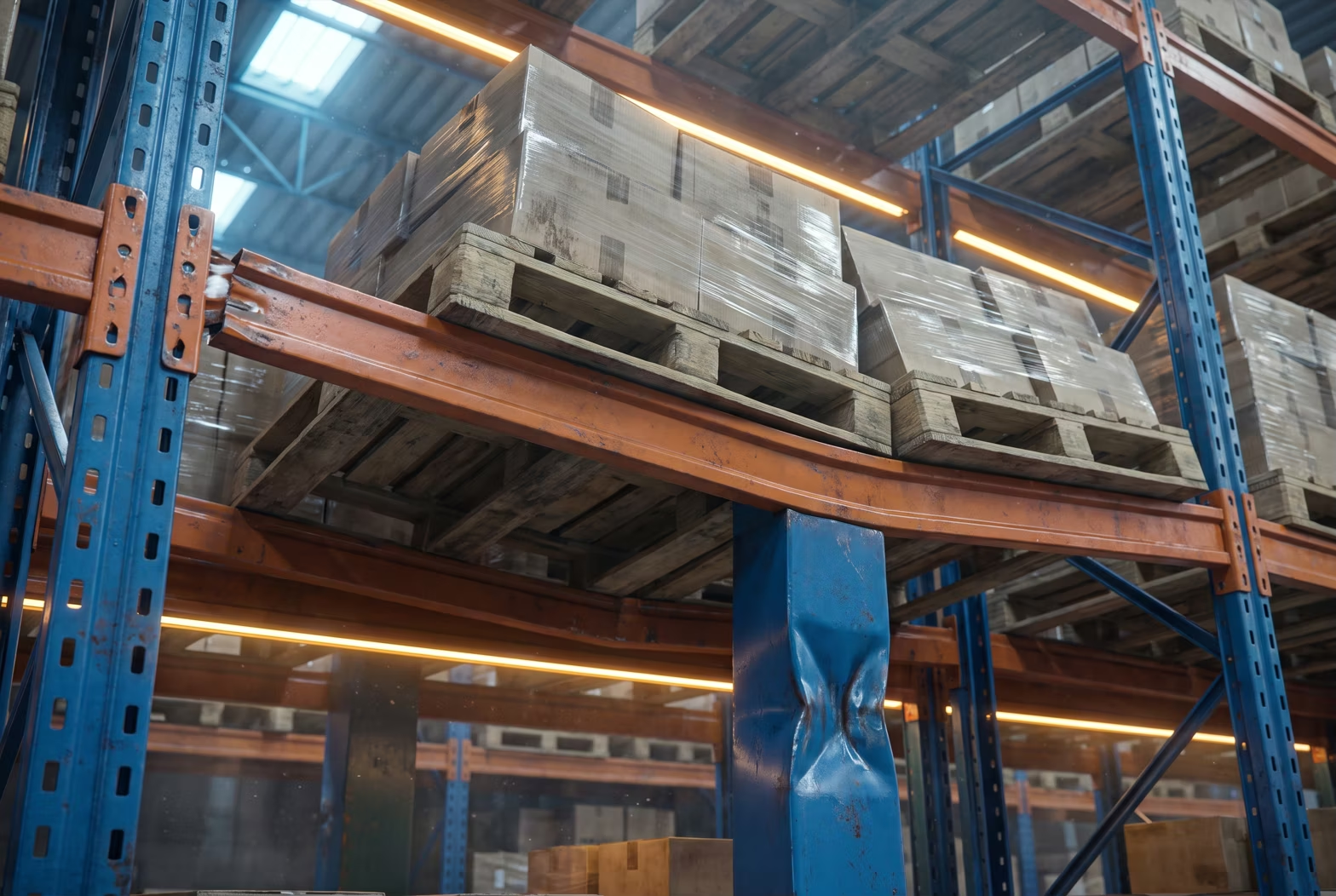
Warehouse rack repair treats beam damage and column damage as two separate questions, because a beam that has sagged and a rack column that has bowed put load at risk in different ways. Confirming which one is actually damaged, and how far the damage extends, is the first decision 1 Stop makes on any repair call, before any part gets ordered.
A warehouse dealing with either kind of damage benefits from knowing the distinction exists in the first place. A warehouse team trained to spot the difference between a sagging beam and a bowed column can flag the right urgency immediately, while a warehouse team treating every dent the same way risks under-reacting to the more serious of the two.
What a Beam Failure Actually Involves
A beam spans the gap between two columns in a warehouse rack and carries the pallet load across that span in bending rather than compression. Overloading a level, or striking a beam with a raised fork, shows up as a visible sag or a dented face along its length. The connectors at each end, which lock the beam into the column, are a separate failure point from the beam itself and can loosen or shear even when the beam face looks intact.
Because a beam failure is usually confined to one level in a warehouse rack and doesn’t change how the column above and below it carries load, it tends to be the more contained of the two problems. That does not make it minor for a warehouse. A sagging beam still means the pallets resting on it are supported by less structure than the level was rated for, and it needs addressing before more weight goes on top of the problem.
What a Column Failure Actually Involves
A rack column carries the warehouse’s stored weight down to the floor through every level stacked above the point of damage. A bowed or dented column puts every beam connection along its height at risk in a warehouse, not just the section nearest the impact. That is the core difference from a beam failure: the risk runs the full height of the rack frame instead of stopping at one level.
A single column in a warehouse can be shared by two adjacent bays as well, which means damage to it does not stay contained to the aisle where the impact happened. Whatever a warehouse has stored in the bay on the other side of that column is riding on the same compromised support, even though nothing on that side looks disturbed.
A rack column also interacts with its bracing in a way a beam does not. Damage severe enough to shift the column out of alignment can put stress on the diagonal struts connecting it to the next frame. This is why a rack column assessment has to look past the dent itself to the bracing around it, and often to the rack frame beside it as well.
Height in a warehouse’s racking itself makes this same underlying problem considerably worse over time. A rack column supporting storage twelve or twenty feet up carries a longer, more consequential load path than a shorter one. The same degree of bowing is a more serious finding on a tall selective rack frame than it would be lower down, and it warrants a closer look rather than the same generic response every time.
Why the Repair Approach Is Never the Same
A damaged beam is often the simpler call for a warehouse. If the connectors are intact and the sag is confirmed against the level’s rated capacity, a straight swap for a new beam of the same profile resolves it for a warehouse without touching the rest of the rack frame.
A damaged column asks more of a warehouse’s assessment before any repair gets chosen. 1 Stop looks at where on the column the damage sits, whether the bracing tied to it is still sound, and how many beam levels are carried above that point. Those three factors decide whether a bolt-on warehouse repair kit restores the rack frame or the section needs full replacement.
Confusing the two rarely ends well for a warehouse. Treating a bowed column as a beam-level problem, and swapping only the beam while leaving a compromised column in place, fixes what was visible without touching what actually failed.
Why the Same Impartial Standard Applies to Both
Telling a beam problem from a column problem is only the first decision for a warehouse. Choosing the actual warehouse fix is the second, and it deserves the same impartial standard. 1 Stop’s decades of rack repair experience come paired with an agnostic view into both what’s damaged and which repair path actually fits it. A rack repair provider selling a single manufacturer’s kit has a built-in reason to reach for that kit on a beam or a column alike, regardless of whether it’s the right match. Depending on which component is damaged and how severely, a different manufacturer’s kit, or in some cases full replacement, ends up being the safer choice. Making that call well takes a partner without one product to steer toward.
Getting the Distinction Right Before Ordering Parts
A warehouse running lean on maintenance staff feels this pressure hardest. A warehouse willing to slow down for one extra check almost always comes out ahead of one that does not.
A warehouse team under time pressure is the most likely to make this exact mistake, since a quick glance is faster than a proper rack assessment. A warehouse that trains its own staff to tell the two apart catches more of these early, while a warehouse relying purely on outside inspection visits can miss the distinction between calls.
Warehouse rack repair goes wrong fastest when a column problem gets treated like a beam problem, because the risk and the fix are not the same size. Telling the two apart before recommending anything is the diagnostic discipline 1 Stop’s decades of hands-on repair work are built around.