








Warehouse Rack Repair: Making the Right Call Between Repair and Replacement
Repairing damage that should have been replaced, or replacing a section a kit could have restored, both waste money in different directions, so the decision has to follow the damage rather than a default answer.
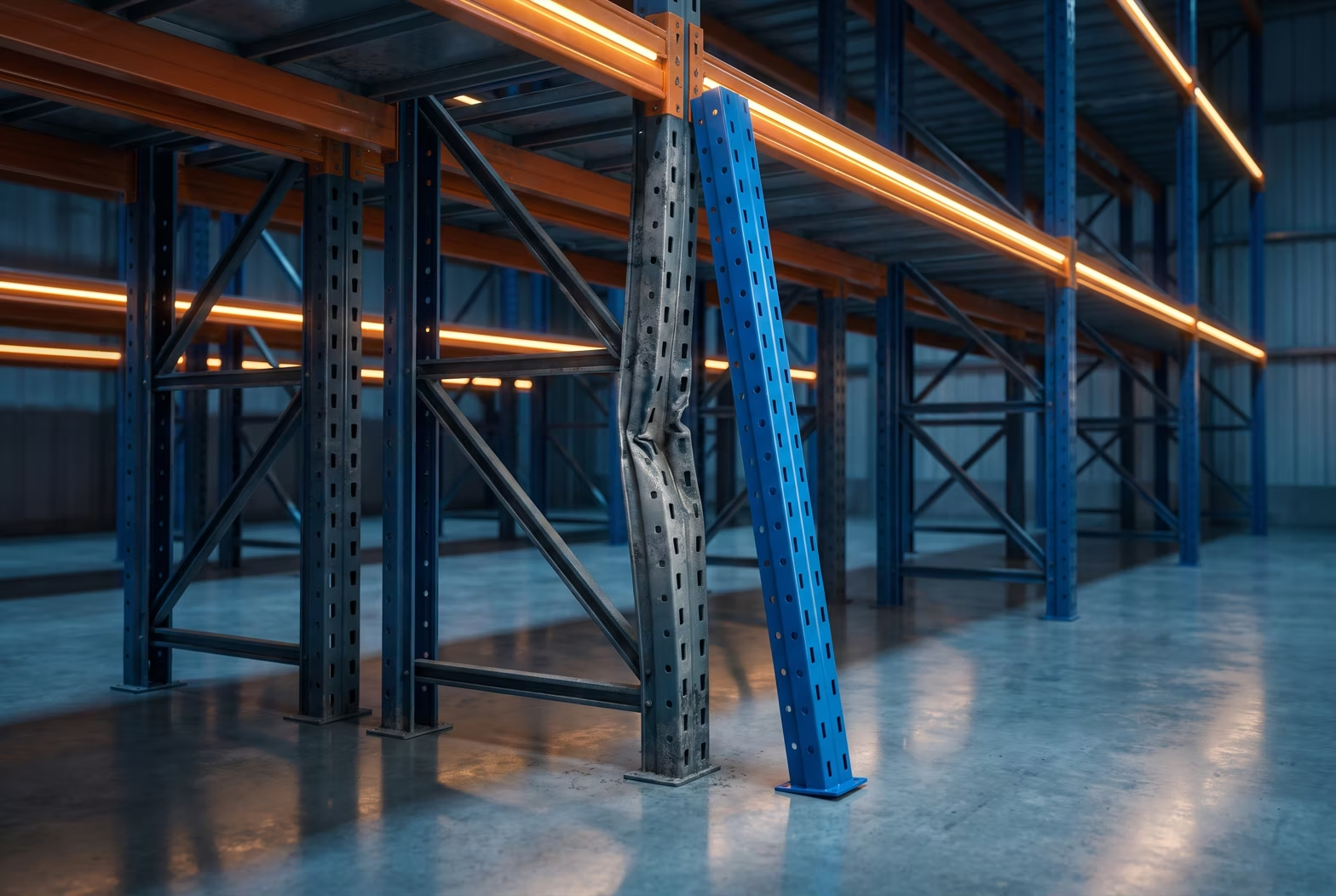
Anyone facing warehouse rack repair after a damaged column has to weigh it carefully against full replacement, and neither option is automatically the safer or cheaper choice. 1 Stop decides between the two based on what the damage actually is, not on which option happens to be easier to sell or quicker to schedule.
A warehouse facing this decision benefits from seeing it as one call, not two separate guesses. A cost-conscious warehouse might default to repair out of habit, while a safety-focused warehouse might default to replacement out of caution, and either warehouse can end up wrong without an actual assessment behind the choice.
When Repair Is the Right Call
Localized damage confined to a single column in a warehouse rack, with the surrounding bracing still fully sound, is generally the clearest case for repair. A bolt-on kit built to the confirmed manufacturer and model can restore the original load path without pulling the rack frame apart or emptying the bay to do it.
Repair also holds up well on damage that is recent, isolated, and has not been left to sit. A single forklift strike inside a warehouse that has not been left in service long enough to worsen, and has not affected the beam connections above it, is usually a contained problem with a contained fix.
Cost and downtime favor repair in these cases too. A kit installed on a warehouse site in a matter of hours keeps the bay in use. A full section swap, by comparison, means unloading the bay, waiting on replacement parts, and reassembling before it goes back into service.
When Replacement Is the Right Call
Some warehouse damage has already moved past what a rack repair kit is built to restore. A rack column that has twisted along its length, rather than simply bowed in one direction, is one example. A rack column where the damage has gone unaddressed long enough to worsen with continued use is another. Both often fall outside the tolerance a bolt-on fix is engineered for.
Corrosion changes the calculation for a warehouse as well. A rack repair kit reinforces sound steel around a damaged section, but it cannot compensate for a rack column that has thinned from rust or long-term moisture exposure across its length. In that case, replacement addresses the actual problem for a warehouse instead of reinforcing steel that is already compromised elsewhere.
Repeated damage to the same section is a similar signal. A column that has been hit and repaired more than once is telling a warehouse something about how that bay gets used, and a second or third repair on the same spot is rarely the more economical long-term choice.
Load requirements changing over time in a warehouse push toward replacement as well. A rack installed in a warehouse for one product mix can end up storing heavier pallets years later. A rack column carrying more weight than its original rating allows needs a section engineered for the new load, not a rack repair sized to the old one. Repairing a rack column that never matched its current load is not really a rack repair. It is a smaller version of the same underlying mismatch.
Why the Line Isn’t the Same on Every Rack
The tolerance that separates a repairable column from one that needs replacing is not universal. It is set by the manufacturer and varies by rack type, gauge, and construction. A threshold that applies to one structural frame does not automatically apply to a lighter roll-formed system nearby. This is part of why 1 Stop confirms the exact rack before ruling either way for a warehouse, rather than applying one rule of thumb across every brand on site.
A single-manufacturer provider working a warehouse call has less reason to draw that line carefully, since their answer is the same kit regardless of which side of the tolerance the damage actually falls on. An agnostic assessment has no such default to lean on for a warehouse, so the tolerance gets checked against the confirmed rack rather than assumed.
Why the Repair-or-Replace Call Also Depends on Staying Manufacturer-Neutral
Deciding between repair and replacement is only the first layer of an unbiased call for a warehouse. If repair is the answer, which manufacturer’s kit fits is the next one, and it deserves the same neutrality. 1 Stop’s over 30 years of experience support an agnostic view across both decisions together. A provider selling one manufacturer’s kit has a reason to steer toward repair, and toward their own kit specifically, regardless of what the damage and the confirmed rack actually call for. Depending on those specifics, a different manufacturer’s kit, or replacement after all, can be the more appropriate outcome. Reaching the right answer on both layers takes a partner without a product to place in front of a warehouse.
Making the Call Without Guessing
A warehouse working from a planned annual maintenance budget often has more flexibility to choose replacement when the assessment calls for it, since the cost sits inside a line item set in advance. A warehouse pulling from an unplanned repair fund feels more pressure to default toward the cheaper-looking repair option, even when the damage has already crossed into replacement territory.
Neither budgeting situation changes what the damage actually calls for, but it explains why two warehouses facing the identical finding sometimes land on different answers. 1 Stop’s assessment gives a warehouse manager the actual number to plan around either way, rather than a recommendation shaped by which kit happens to be easiest to sell that week.
Warehouse rack repair and replacement are both legitimate answers, and the only wrong outcome is picking one before the damage has actually been assessed against the rack in question. Neither option is inherently the safe default, and neither is inherently the cheap shortcut. That judgment, built on decades of seeing where a rack repair kit holds and where it does not, is what 1 Stop brings to the decision before a single part gets ordered.