








Warehouse Rack Repair: Reading the Warning Signs Before They Become Failures
Most rack failures give a visible warning first, and knowing what to look for during a routine walkthrough is what turns that warning into a scheduled repair instead of an unplanned one.
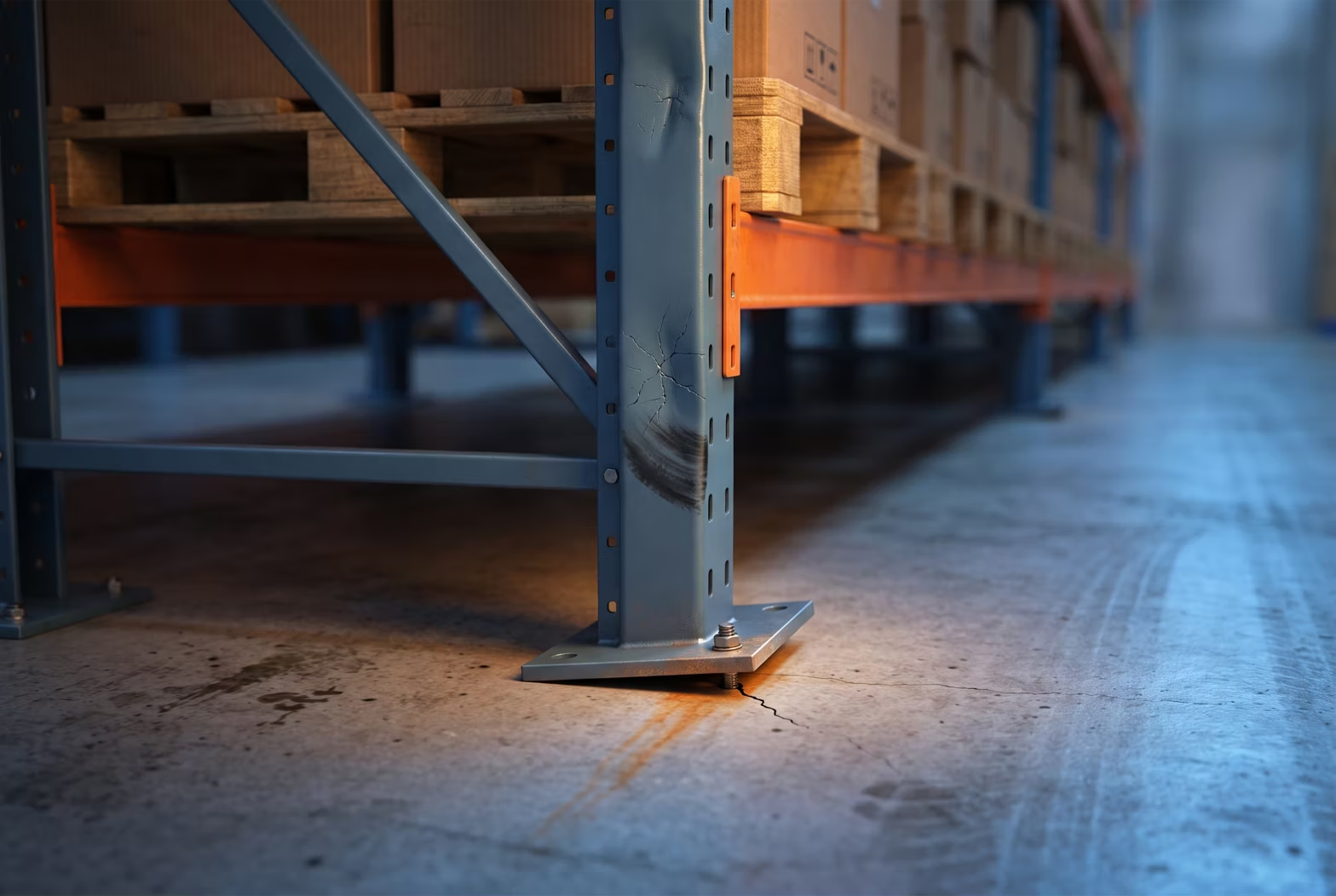
Warehouse rack repair works out easiest and cheapest when it starts before the damage becomes a failure, which means knowing what an early warning actually looks like. 1 Stop trains its warehouse inspection process around a short list of visual cues showing that a rack column, beam, or connection needs attention.
None of these warehouse rack signs require special equipment to spot. They require knowing where to look and what a genuine problem looks like next to normal wear, which is the part a routine internal warehouse walkthrough often misses. A crew walking a warehouse aisle every day can grow used to a look that a fresh set of eyes would flag immediately.
A Column That Is No Longer Straight
A straight vertical rack column is the easiest thing to check and the easiest thing to miss once it is gone. Standing at the end of a warehouse aisle and sighting down a run of rack uprights will show a bowed column long before a tape measure would be needed to confirm it.
Paint or coating on a rack column that has cracked or flaked along a bend is a second, quieter version of the same signal. Steel does not flex without leaving some mark on its surface finish, even when the bend itself is subtle.
A Beam That Sags Under Its Own Load
A rack beam should sit level between its two connection points. A visible dip in the middle, especially one that gets more noticeable as pallets are added to that level, points to a beam already carrying more deflection than it should.
Gaps or daylight visible at a beam connector, where the beam should be seated flush against the column, signal a rack connection that has started to work loose rather than a beam problem on its own.
Bracing and Hardware That Has Gone Missing
A diagonal or horizontal brace that has come loose is one of the easier warehouse warning signs to overlook, because the rack frame can still look mostly normal without it. The same goes for a brace removed during a reconfiguration and never replaced, or one sheared off in an earlier impact nobody logged.
Missing safety pins on rack beam connectors carry the same risk in miniature. The beam may still be seated correctly today in a warehouse, but nothing is holding it there if it gets bumped, which is a very different situation from a beam that is actually locked into place.
Damage That Has Already Been Marked and Ignored
A warning label, a strip of tape, or a rack section flagged during a past warehouse inspection and never followed up on is its own category of sign. It means someone on the warehouse floor already noticed the problem. The gap since then is time the damage has had to worsen, not time it has had to resolve itself.
This category is more common than most warehouse operators expect. A damaged warehouse bay gets tagged during a busy period, the tag stays up, and the follow-up rack repair keeps getting pushed behind more urgent tasks until the tag itself becomes part of the background.
An Unbiased Read Matters as Much as a Sharp Eye
Spotting a warning sign on a warehouse floor is only half the job. What happens next, who decides on the fix, matters just as much. 1 Stop’s over 30 years in rack repair come with an agnostic approach that looks at both the damage and the full range of repair options available for it. A provider tied to a single manufacturer’s kit line has an incentive to reach for that kit regardless of what the warning sign actually indicates, which is not the same as weighing every option fairly. Depending on the specific damage a warning sign turns out to represent, a different manufacturer’s kit, or occasionally full replacement, is the more appropriate call. Getting the right answer on which one applies starts with a partner who isn’t selling just one solution.
Turning a Visual Sign Into an Actual Assessment
Spotting a rack warning sign is only useful if it leads somewhere in a warehouse. 1 Stop’s inspection process takes a warehouse team’s own walkthrough observations and turns them into a specific finding, covering which column, how far out of tolerance, and what warehouse rack repair actually addresses it. That translation draws on decades of reading exactly these signs across many different warehouse racking types.
A warehouse team flagging what they see, even informally, shortens that process considerably. A photo of a suspicious bend, a note about a rack beam that looks lower than its neighbors, or a mention of a bay nobody has fully trusted since a forklift clipped it months ago all give a warehouse inspection a specific place to start rather than a whole building to re-check from scratch.
A short, laminated card at the start of each aisle, listing the five or six signs 1 Stop trains crews to look for, turns this from a judgment call into a checklist a forklift operator can run through in seconds. A warehouse with a dedicated safety role can build that habit into a formal weekly walk; a smaller operation spreading the task across whoever is on shift gets nearly the same benefit just from having the list posted where people actually look.
The payoff shows up in which calls a warehouse ends up making. A rack column caught at the bowed-but-still-standing stage is a scheduled repair. The same column caught after it finally buckles under a normal load is an emergency call, a cleared aisle, and often a much larger invoice.
Warehouse rack repair planned around an early sign is a scheduled job on 1 Stop’s terms, fit into the warehouse’s own timeline. Left until the sign becomes a failure, it becomes an emergency on the warehouse’s terms instead, usually at the least convenient moment.