








Warehouse Rack Repair: The Decision Framework Behind Every Fix
Every warehouse rack repair recommendation follows the same underlying sequence of questions, even though the answer looks different on every job.
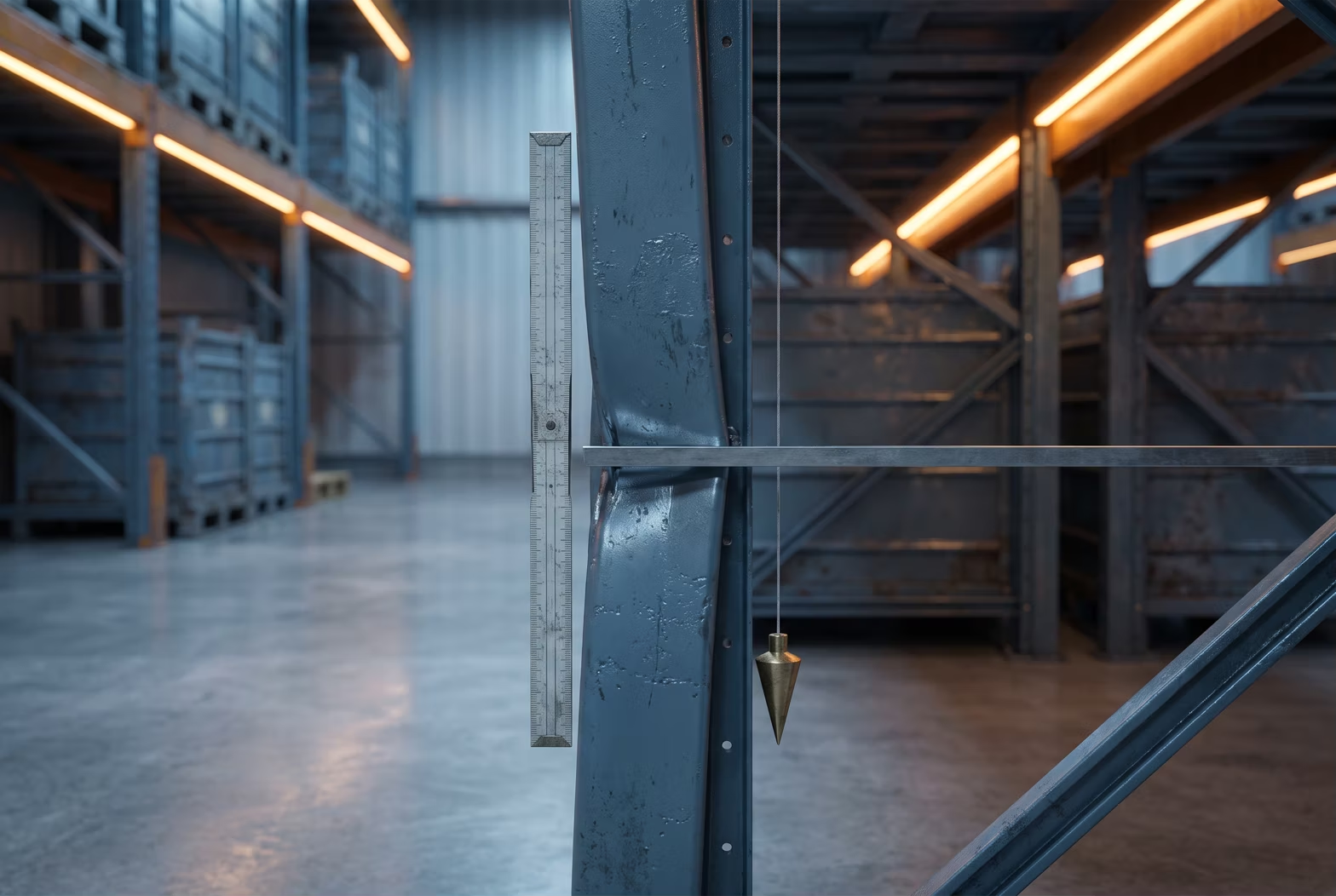
Warehouse rack repair can look inconsistent from the outside, since two similar-looking dents sometimes get two different recommendations. The reason is not inconsistency. It is a decision framework being applied to two situations that are not actually the same once the details are checked.
Question One: What Is the Rack?
Everything downstream for a warehouse depends on this answer. Manufacturer, model, gauge, and rated capacity set the tolerance every later decision gets measured against. Skipping this step means every question after it is being answered against a guess for that warehouse.
This is why identification comes before assessment rather than alongside it on any warehouse call. A crew that starts measuring damage before confirming what they are measuring it against is working from an assumed tolerance instead of a confirmed one, and the two do not always match.
Question Two: Where Is the Damage?
Location changes the stakes for a warehouse. Damage low on a rack column, where compressive load is highest, carries more weight behind it than the same size mark higher up. Damage on a shared column between two bays affects both sides, not just the one where the impact happened.
Height in a warehouse rack frame matters too. A rack column carrying several levels of storage above the damage point has a longer load path riding on it than one supporting only a single level. The same visible mark is a more serious finding the higher up the storage goes.
Question Three: How Far Outside Tolerance Is It?
This is where the manufacturer’s own specifications get applied directly for that warehouse’s rack. A bowed column measured against its allowable deviation either falls inside a repairable range or outside it. There is no universal number that applies across every warehouse. The threshold belongs to the specific rack identified in question one.
Question Four: Is the Surrounding Structure Sound?
A rack column can be repairable on its own and still sit next to bracing that is not. Diagonal struts, connectors, and adjacent columns all get checked before a rack repair plan is finalized. Fixing one piece while leaving a compromised neighbor in place does not actually resolve the warehouse’s rack frame problem.
This step is also where a single-column warehouse repair sometimes turns into a two- or three-column job. A strut that ties two frames together is either sound or it is not. If it is not, both frames it connects need to be part of the plan, not just the one that took the visible hit.
Question Five: Repair Kit, Component Swap, or Full Replacement?
Only once the first four questions are answered for a warehouse does the actual fix get chosen. A bolt-on kit suits contained, in-tolerance damage with sound surrounding structure. A component swap fits a single failed part in a warehouse rack with everything else intact. Full replacement answers damage that has moved past what any of the lighter fixes are built to restore.
Cost and downtime for the warehouse get weighed at this stage too, but only after the technical answer is settled, not before it. A cheaper option that does not actually match the damage is not a genuine option for a warehouse, whatever it saves on paper.
Why the Framework Depends on Staying Product-Neutral
The five-question framework only works if the fifth question, which repair to use, isn’t answered in advance. 1 Stop’s over 30 years of rack repair experience come with an agnostic position that keeps that question open until the first four are answered. A provider selling one manufacturer’s kit has effectively answered question five before question one is even asked, which undermines the whole sequence. Depending on how the damage actually scores against the framework, a different manufacturer’s kit, or full replacement, can be the outcome the framework points to. Trusting the framework means trusting a partner without a predetermined answer waiting at the end of it.
Why the Framework Matters More Than the Answer
Two warehouses with what looks like the same dent can land on real, substantively different answers once these five questions are actually worked through, and that is the framework doing its job rather than failing at consistency. A different manufacturer, a different location on the column, or different bracing condition changes the outcome for a warehouse even when the surface damage looks identical.
A warehouse facing a genuine emergency has real pressure to move fast, but even that warehouse benefits more from the sequence compressed than from any step skipped outright.
The step most often skipped under time pressure is question four, checking the surrounding bracing, because the visible damage sits on one column and the temptation is to fix that column and move on. A warehouse that skips it gets a repair that holds on the piece that was actually assessed and fails on the connector nobody checked, often within the same year.
1 Stop applies this same sequence on every call, built from decades of watching where a shortcut through any one of these questions leads to the wrong fix. Warehouse rack repair decided this way is repeatable and explainable for any warehouse, not a judgment call made on the spot from a glance at the dent. It also means a warehouse operations manager can ask for the reasoning behind a recommendation and get a real answer at each step, rather than a conclusion with nothing showing how it was reached.