








Warehouse Rack Repair: Repairing Racks the Manufacturer No Longer Makes
A rack does not stop needing warehouse rack repair just because its manufacturer stopped making it, and the age of the system changes what a workable fix actually looks like.
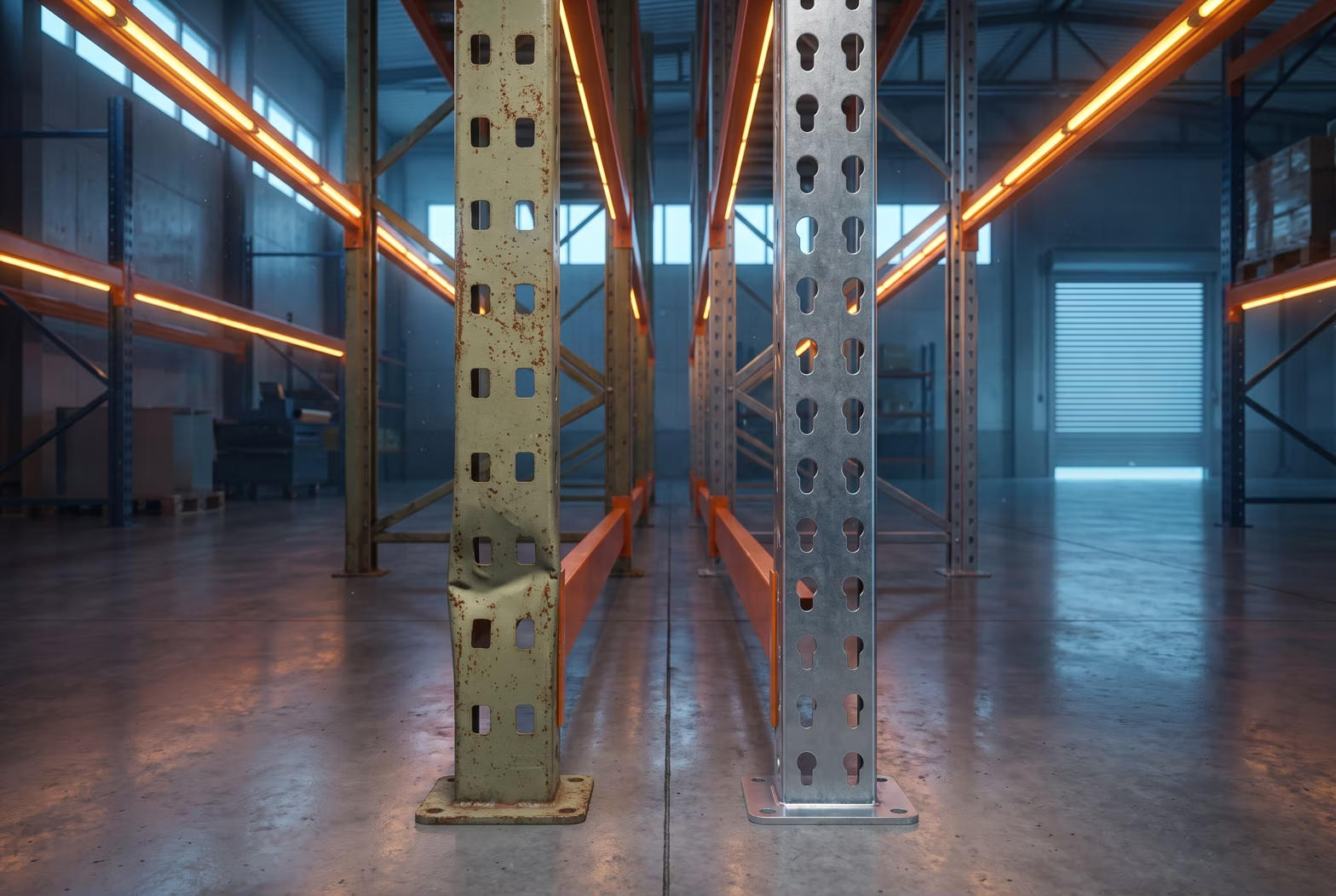
Warehouse rack repair on a system installed fifteen or twenty years ago runs into a problem a newer installation never faces: the exact part may no longer exist. 1 Stop treats that as a sourcing and engineering question rather than a reason to write off the rack.
Why Age Changes the Repair, Not Just the Part
A discontinued profile cannot simply be reordered from the manufacturer for a warehouse. The options narrow to finding compatible salvage stock, engineering a bolt-on rack solution that matches the original hole pattern and gauge, or building a new section to the original specifications from scratch.
Each of those paths depends on the identification step being done properly first for that warehouse. Salvage stock only works if it is confirmed as a genuine match, not just a visually similar column from a different era of the same manufacturer’s lineup, since even one company’s own product line can shift dimensions across decades.
Age brings its own physical wear into the picture for a warehouse as well. A rack column installed decades ago in a warehouse has absorbed years of ordinary handling wear on top of whatever impact damage prompted the repair call. That accumulated condition factors into whether a rack repair restores the section or simply delays a replacement that was already overdue.
Corrosion and Fatigue Nobody Planned For
Steel that has sat in a humid warehouse, a coastal climate, or a temperature-cycling freezer environment for years can be thinner than its original gauge, even without a single visible impact. A rack repair kit sized to the rack’s original specifications does not account for that loss on its own. An older warehouse system gets checked for general condition, not just the specific damage that triggered the call.
This is part of why a legacy repair takes longer to properly scope for a warehouse than a rack repair on a five-year-old system. The visible damage is the reason for the call, but it is rarely the only finding once the surrounding steel gets a closer look.
Verifying What the Rack Was Ever Actually Rated For
Older warehouse installations sometimes predate the paperwork. A load plaque may be missing, illegible, or simply gone after enough years in service, which leaves a warehouse without a documented capacity to repair back to. Confirming the original rating has to happen before a rack repair can credibly restore anything.
That confirmation for a warehouse comes from one of two places. The manufacturer’s archived specifications settle it directly when they still exist. Where they do not, engineering analysis of the rack’s actual dimensions and construction can establish a defensible rating in their absence.
Why an Agnostic Approach Matters Even More on Old Racking
A single-manufacturer repair provider has nothing to offer a warehouse once that manufacturer stopped making the product decades ago. 1 Stop’s identification process, built on exposure to a wide range of brands over many years, is what makes it possible to source or engineer a compatible fix for a system that has otherwise outlived its own manufacturer.
A warehouse running racking from a company that no longer exists at all, not just a discontinued product line from an active manufacturer, is not unusual after twenty or thirty years in the same building. That situation only has a workable answer for a warehouse when the repair provider is not limited to a single company’s current catalog to begin with.
Why Older Racking Needs an Especially Unbiased Assessment
A discontinued rack has no manufacturer left to call, which makes an unbiased assessment for that warehouse even more important than usual. 1 Stop’s decades of experience across a wide range of brands support an agnostic view into both the condition of aging steel and the rack repair path available for it. A provider tied to one manufacturer’s current product line has nothing useful to offer here at all, let alone an unbiased recommendation. Depending on the rack’s actual condition, a sourced or engineered repair kit, or in some cases replacement, is the right answer. Reaching it takes a partner who works across brands rather than one committed to a single current catalog.
Keeping an Older System in Service Responsibly
A warehouse holding onto original purchase orders, old inspection reports, or even a faded photo of the load plaque before it corroded away gives 1 Stop a real head start on identification, cutting weeks off the sourcing process in some cases. A warehouse with none of that still has a path forward through physical measurement and engineering analysis, just a longer one.
Either way, the responsible move is confirming the rack’s actual current condition and rating before deciding anything, rather than assuming decades-old steel is either fine because it has held up this long or automatically due for replacement because of its age.
Warehouse rack repair on legacy racking is not automatically the wrong call just because the system is old, but it is a call that needs more verification behind it than a rack repair on newer, better-documented racking. 1 Stop brings decades of working on exactly this kind of system to that verification, rather than treating an aging rack as either automatically fine or automatically due for replacement. The goal of warehouse rack repair on any legacy system is the same as on a newer one: a fix that matches what the steel can actually still be trusted to carry, confirmed rather than assumed.