








Warehouse Rack Repair: Managing a Warehouse Running Several Rack Brands
A mixed-brand warehouse turns warehouse rack repair into a tracking problem as much as a technical one, since knowing what is where matters as much as knowing how to fix it.
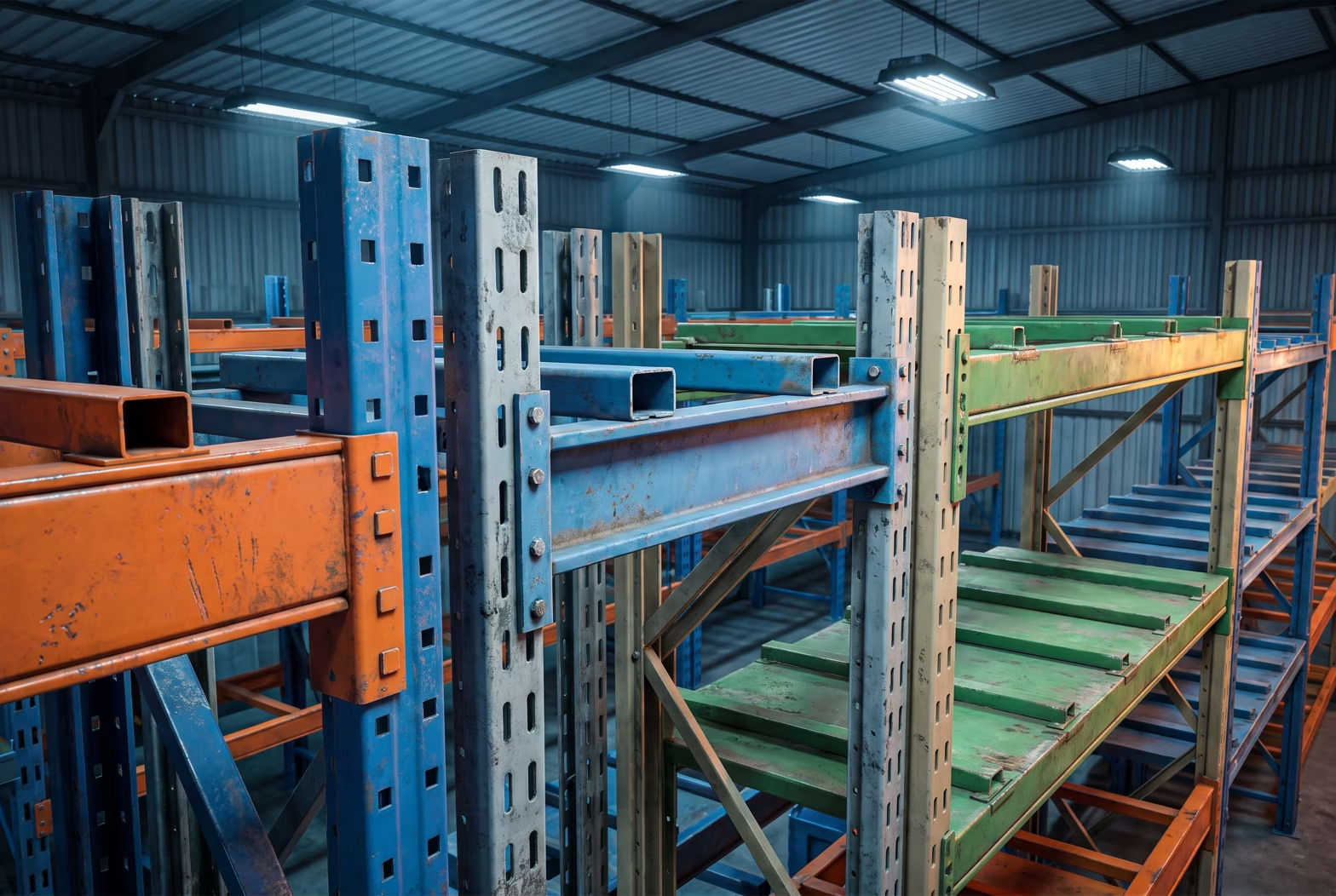
Warehouse rack repair in a mixed-brand warehouse only works smoothly when someone actually knows which brand sits where. Without that record, every repair call starts with a fresh identification step that a mapped site would have already answered.
How Warehouses End Up Running Multiple Brands
Expansion over several years rarely uses the exact same racking twice, since a manufacturer’s product line changes, gets discontinued, or simply is not the best fit for a new section’s specific storage needs. Acquiring a warehouse with racking already installed adds a second brand instantly. Combining used sections with new purchases, common when budgets are tight, adds a third.
None of this is a mistake on the operator’s part. It is simply what happens to a warehouse over enough years of normal operation and growth. A multi-site operator sees the same pattern at a larger scale, since each site’s racking history is shaped by whoever managed procurement at that location at the time.
Why Tracking Matters More Than It Seems
A maintenance team working from memory eventually gets a rack zone wrong, ordering a part that matches the brand they assumed was installed rather than the one actually there. That mismatch costs a second order and a second wait, on top of whatever downtime the original damage already caused.
A simple zone map, noting which rack brand and model runs in which aisle or section, removes the guesswork from every future repair call. It turns a mixed warehouse from a recurring identification problem into a known reference any repair crew can work from immediately.
Turnover on a maintenance team makes this rack tracking worse if nothing is written down. Knowledge that lived in one experienced technician’s memory leaves the warehouse the day that technician does, and the next hire starts back at zero on a warehouse that took years to fully learn.
What This Means for Repair Kit Compatibility
A rack repair kit built for one manufacturer’s hole pattern will not seat correctly on another’s frame, even in aisles that sit next to each other and look identical from a distance. A rack repair crew working a mixed warehouse has to confirm brand at the specific column being repaired, not assume the whole building matches whatever was checked in the last aisle over.
Paint color on a rack column offers a rough first clue in some warehouses, since manufacturers often standardize on a particular finish, but it is never a substitute for confirming the actual punch pattern and gauge. Two different manufacturers can land on similar colors by coincidence, and a repurposed used section can carry paint from a prior owner that has nothing to do with who actually made the rack frame.
Stocking spare rack parts is its own complication in a mixed warehouse. A warehouse that keeps common repair components on hand for faster turnaround has to keep separate stock for each brand in service, rather than a single shared bin that quietly assumes uniformity that does not actually exist.
Building a Maintenance Plan Around the Mix
An inspection and repair plan for a mixed-brand warehouse works best when it is built zone by zone rather than treated as one uniform system. Each rack zone’s inspection checks against that zone’s actual specifications, and repair recommendations get made against the brand installed there specifically.
Rack reporting benefits from the same structure. A written report broken out by zone, rather than one general summary for the whole building, matches how the warehouse is actually organized. It also matches how future budgets will need to be planned.
1 Stop builds this kind of zone-specific plan for mixed warehouses as a matter of course, drawing on decades of servicing warehouses that never settled on a single manufacturer to begin with. A warehouse running four different brands across four expansions gets treated as four connected but distinct systems, not one system with four inconvenient exceptions.
Why a Mixed Warehouse Needs a Repair Partner Without a Favorite Brand
A warehouse running several rack brands cannot be well served by a rack repair provider loyal to just one of them. 1 Stop’s over 30 years of experience across manufacturers support an agnostic view into whichever brand a specific column turns out to be, and into the rack repair method that brand’s specifications actually call for. A single-manufacturer provider can only properly serve the fraction of the warehouse that happens to match their product. Depending on the brand and the damage, a different manufacturer’s kit, or full replacement, is often the right call for one zone and not another. Managing that variety takes a partner without a favorite brand steering the recommendation.
Turning the Mix Into a Manageable System
1 Stop’s warehouse rack repair process does not need a warehouse to standardize on one brand to work well. It needs an accurate record of what is actually installed where, and building that record into a mixed-brand warehouse’s repair plan is exactly what 1 Stop does.